LWIR systems
Germanium-Free Dual-FOV LWIR Lens.
01 / PROJECT CONTEXT
Project overview
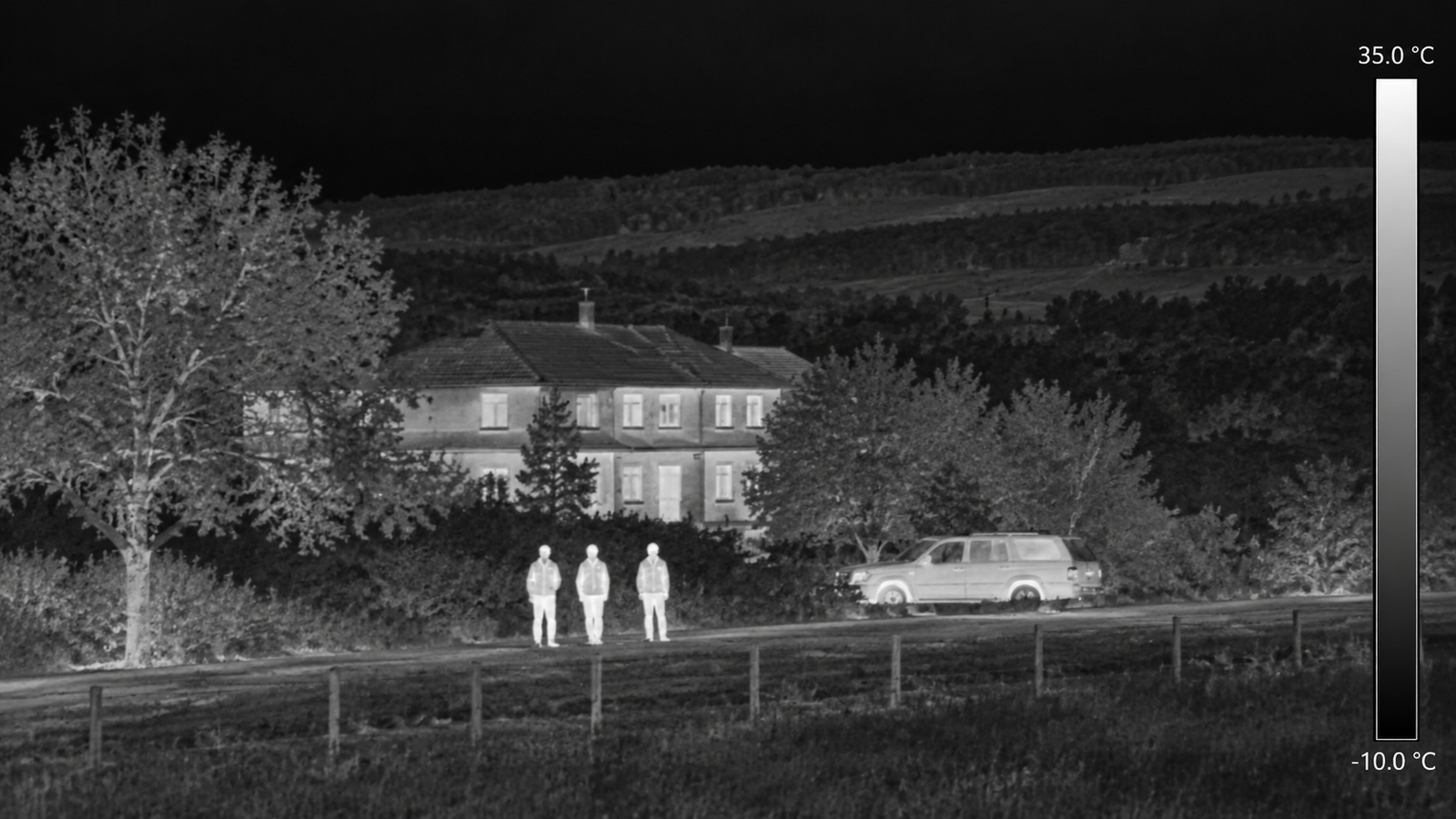
This project explores the development of a customized dual-field-of-view (DFOV) Long-Wave Infrared (LWIR) lens inspired by the optical configuration of a 40–100 mm dual-FOV lens design. During the initial analysis, the apparent use of a variator-only zoom mechanism, without a conventional compensator, prompted an investigation into a similar optical approach.
With the cost and availability of germanium in mind, the system was designed using a germanium-free optical configuration, offering an alternative for infrared imaging applications where material availability and production cost are important considerations.
The design operates at F/1.6 and is athermalized for an operating temperature range of −32°C to +80°C. Particular attention was given to distortion control, optical package length, image format, and back working distance to achieve a compact configuration with greater integration flexibility.
02 / OPTICAL PARAMETERS
Key Specifications
Optical layout — 40mm (Wide)
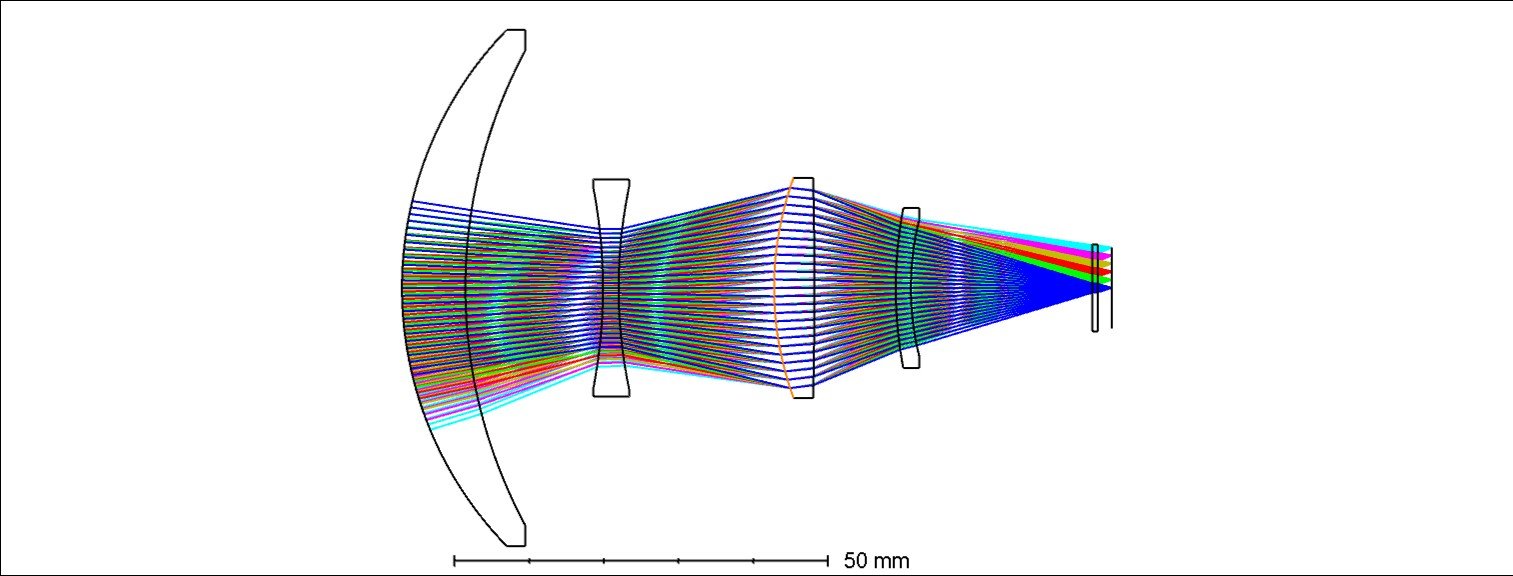
Optical layout — 100mm (Narrow)
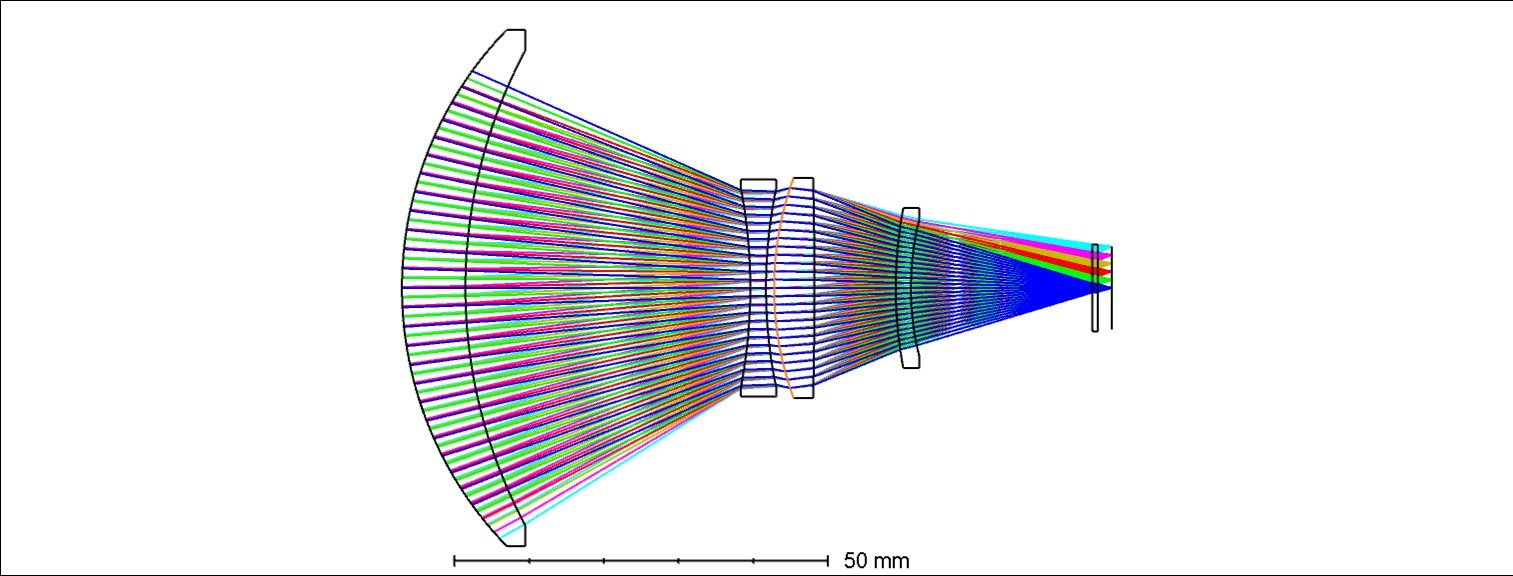
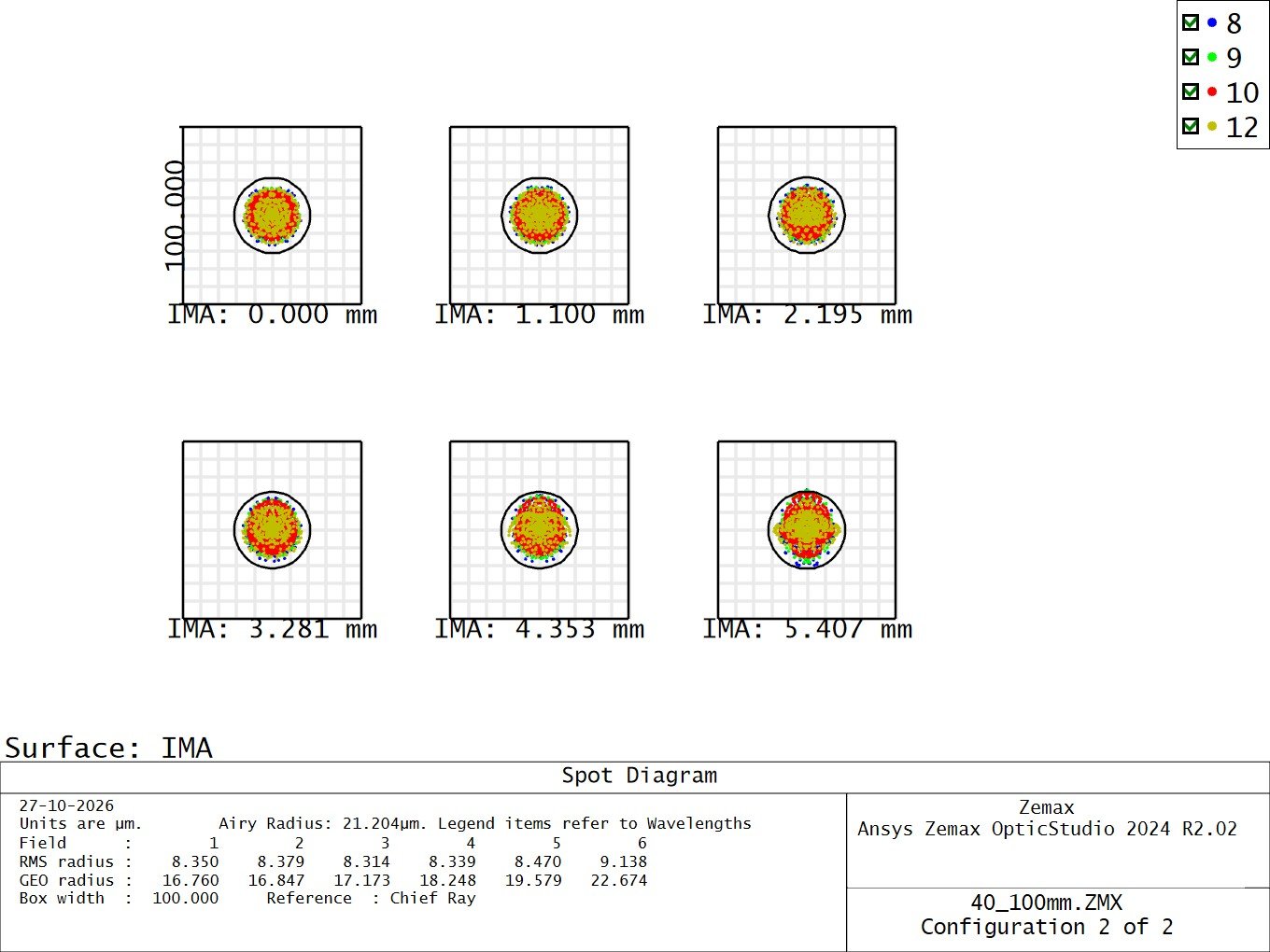
Spot diagrams — 40mm (Wide)
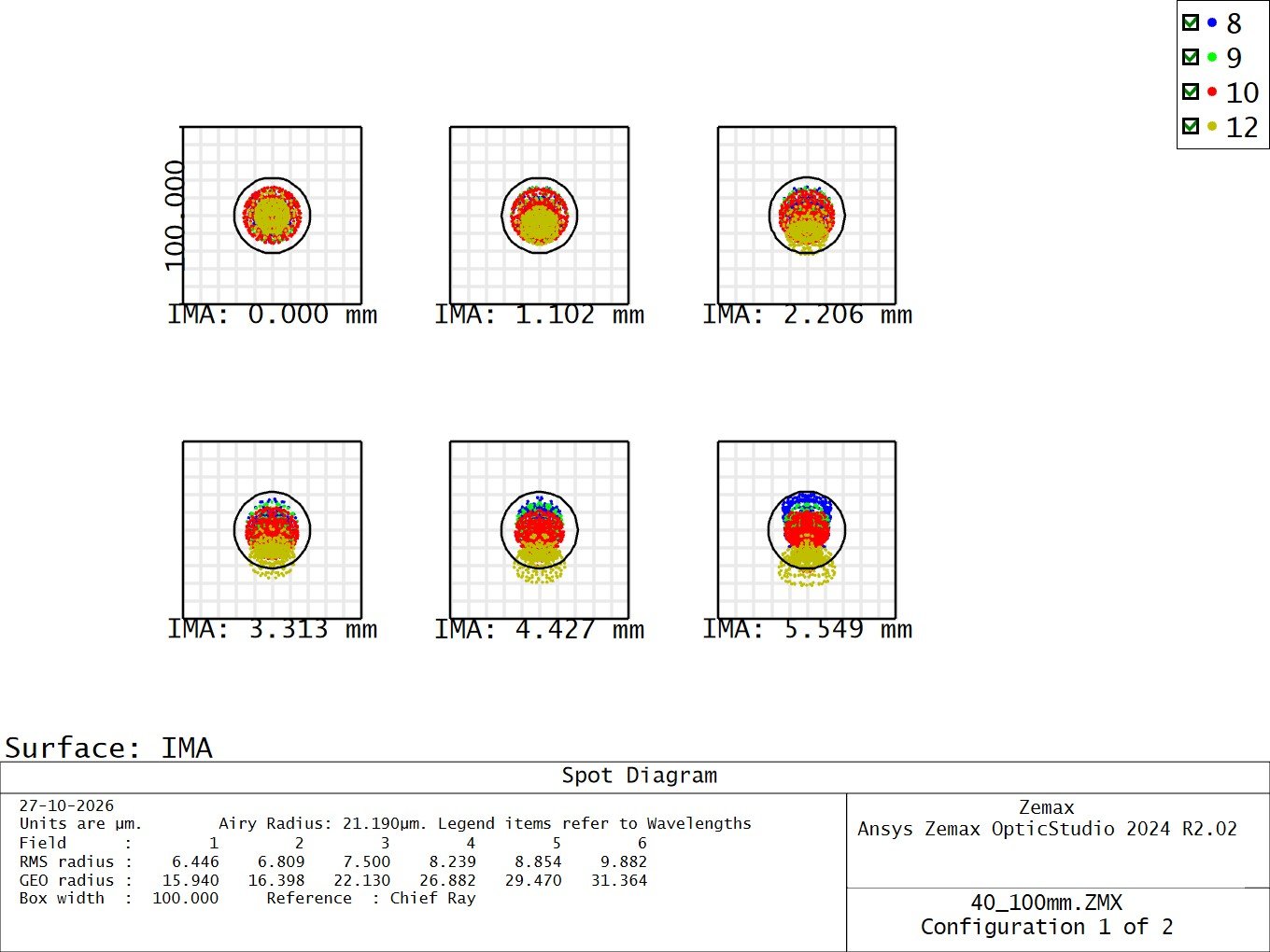
Spot diagrams — 100mm (Narrow)
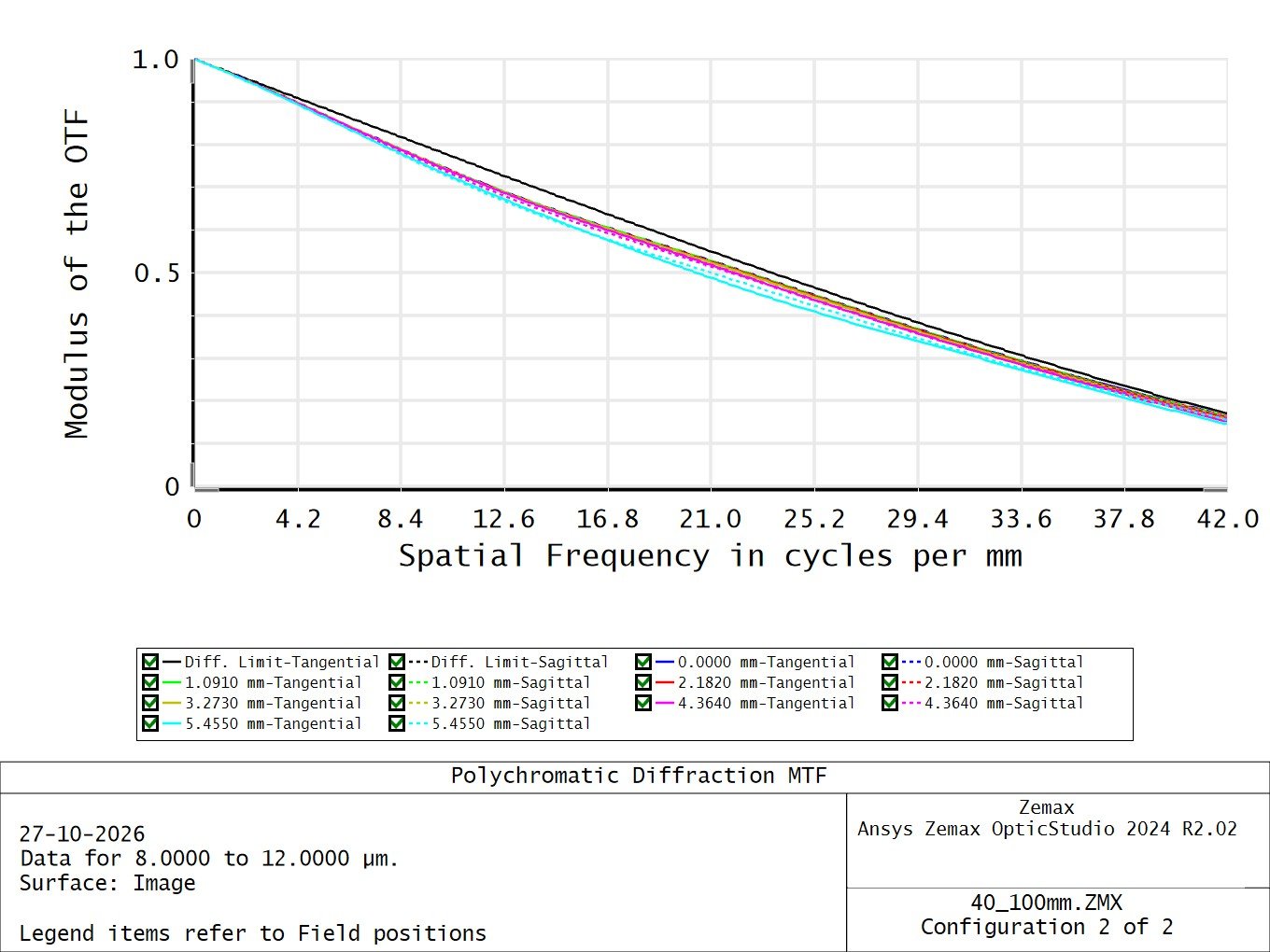
MTF performance — 40mm (Wide)
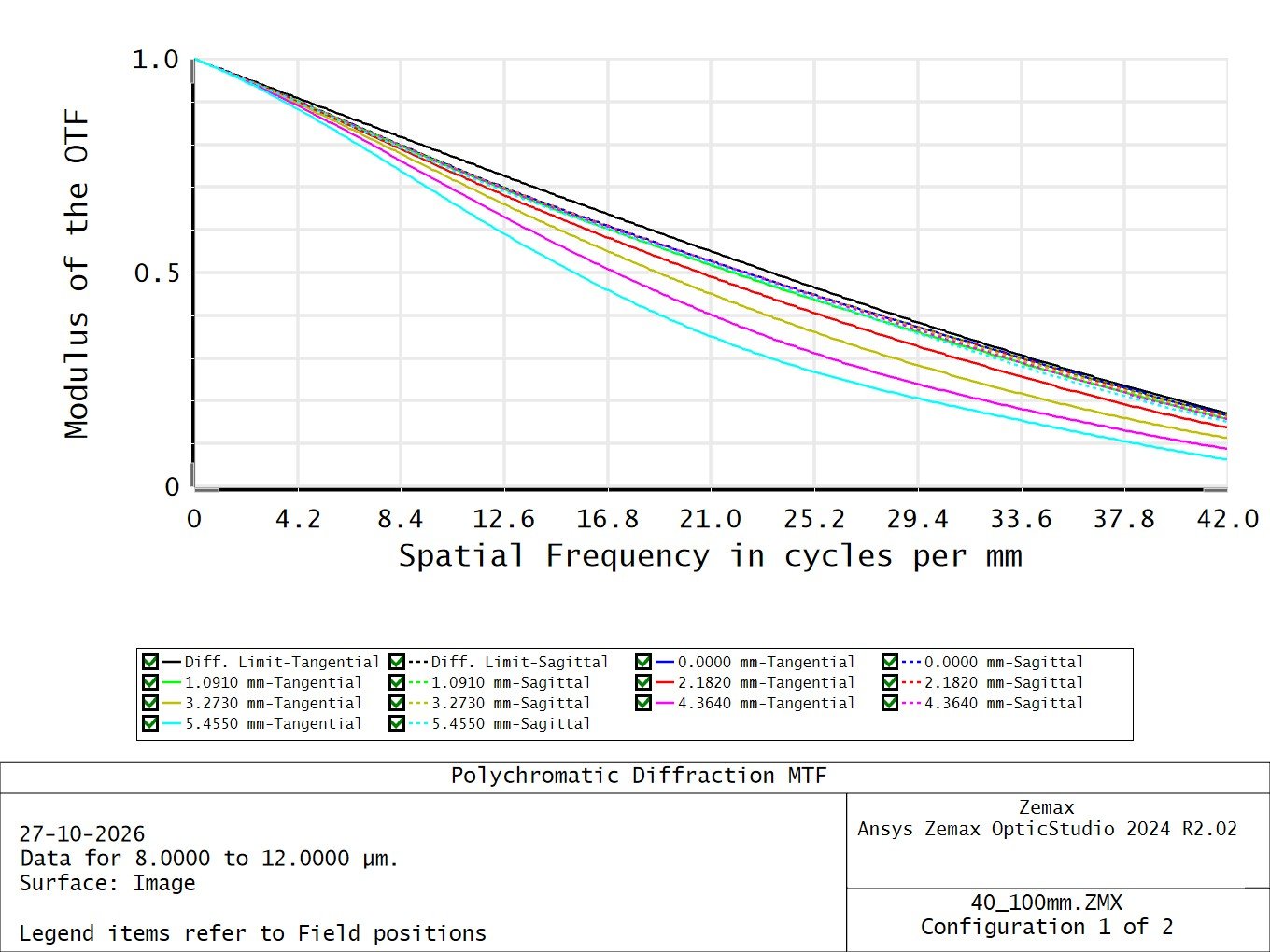
MTF performance — 100mm (Narrow)
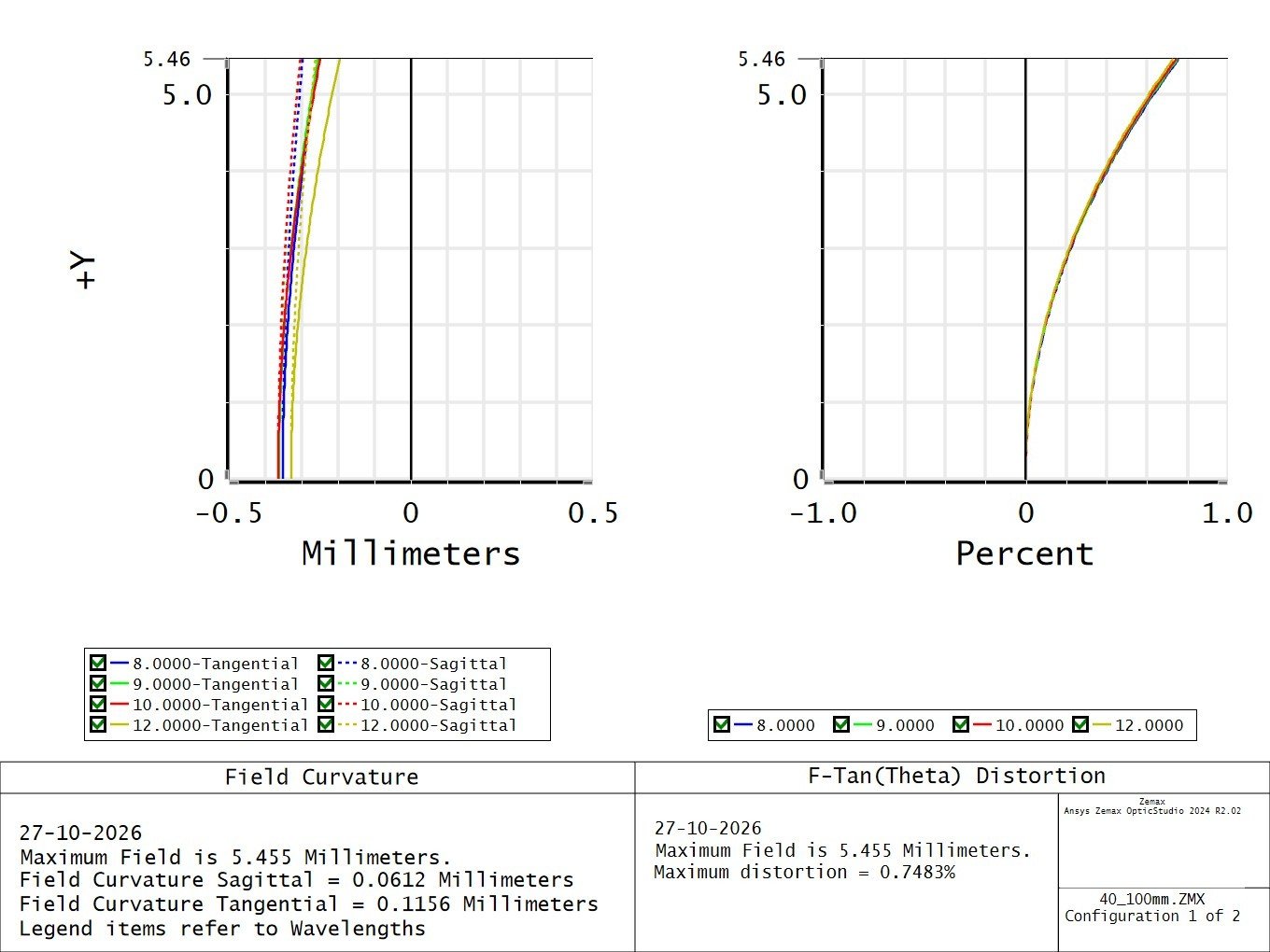
Field curvature & distortion — 40mm (Wide)
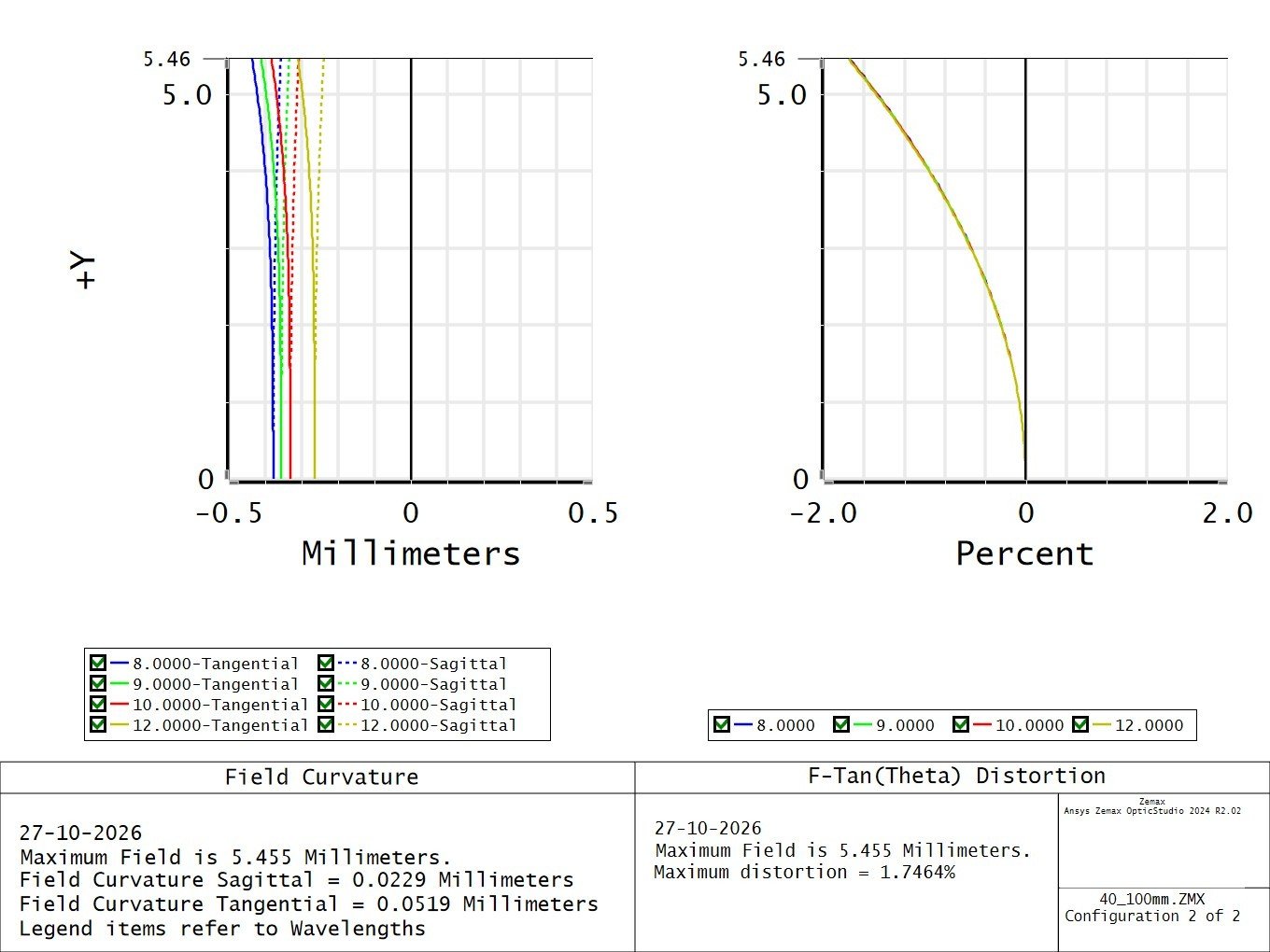
Field curvature & distortion — 100mm (Narrow)
THE ENGINEERING PERSPECTIVE
Design discussion
Germanium-Free Optical Architecture
The optical system was developed to eliminate germanium from the design, addressing material availability and cost considerations while maintaining the intended infrared imaging performance.
Variator-Only Zoom Approach
The reference design's apparent variator-only mechanism motivated the exploration of a similar approach. This configuration offers an interesting alternative to conventional zoom architectures and was investigated with a focus on packaging and optical performance.
Athermalization
The design incorporates athermalization to maintain optical performance across an operating temperature range of −32°C to +80°C. Temperature-dependent changes in optical properties and system focus were considered during the design process.
Compact Packaging and Distortion Control
The customized design achieves a shorter optical package, lower distortion, and a longer back working distance than the reference values used for comparison. These characteristics offer potential advantages for integration into compact thermal imaging systems.
Performance Comparison
| Parameter | Reference Design | Devion Optics Design |
|---|---|---|
| WFOV distortion | < 3.1% | < 2% |
| NFOV distortion | < 2.4% | < 1% |
| Image diagonal | 9.83 mm | 10.83 mm |
| Optical length | ~87.7 mm | ~68.1 mm |
| Back working distance | ~6.35 mm | ~26.87 mm |
| Transmission | > 86% | > 84% |
| Germanium | Reference design | None |
Comparison values are based on the reference data and design results available for this project. The image formats differ, and the values should be interpreted in the context of their respective design requirements.
Conclusion
This project demonstrates an alternative approach to dual-FOV LWIR lens development, combining a germanium-free optical architecture, F/1.6 operation, and athermalization across a broad temperature range. Compared with the reference values, the design offers a shorter optical package, improved distortion figures, and greater back working distance, with a modest reduction in stated transmission.
The result highlights how alternative optical architectures and material selection can help address cost, availability, and mechanical integration challenges in infrared optical system development.
COMMUNITY FEEDBACK
Comments
LET’S START A CONVERSATION
Discuss a similar
optical challenge.
Share your optical requirements or mentorship goals. We’ll explore how Devion Optics can help.
No comments yet. Be the first to share your thoughts!