
LWIR systems
LWIR zoom system.
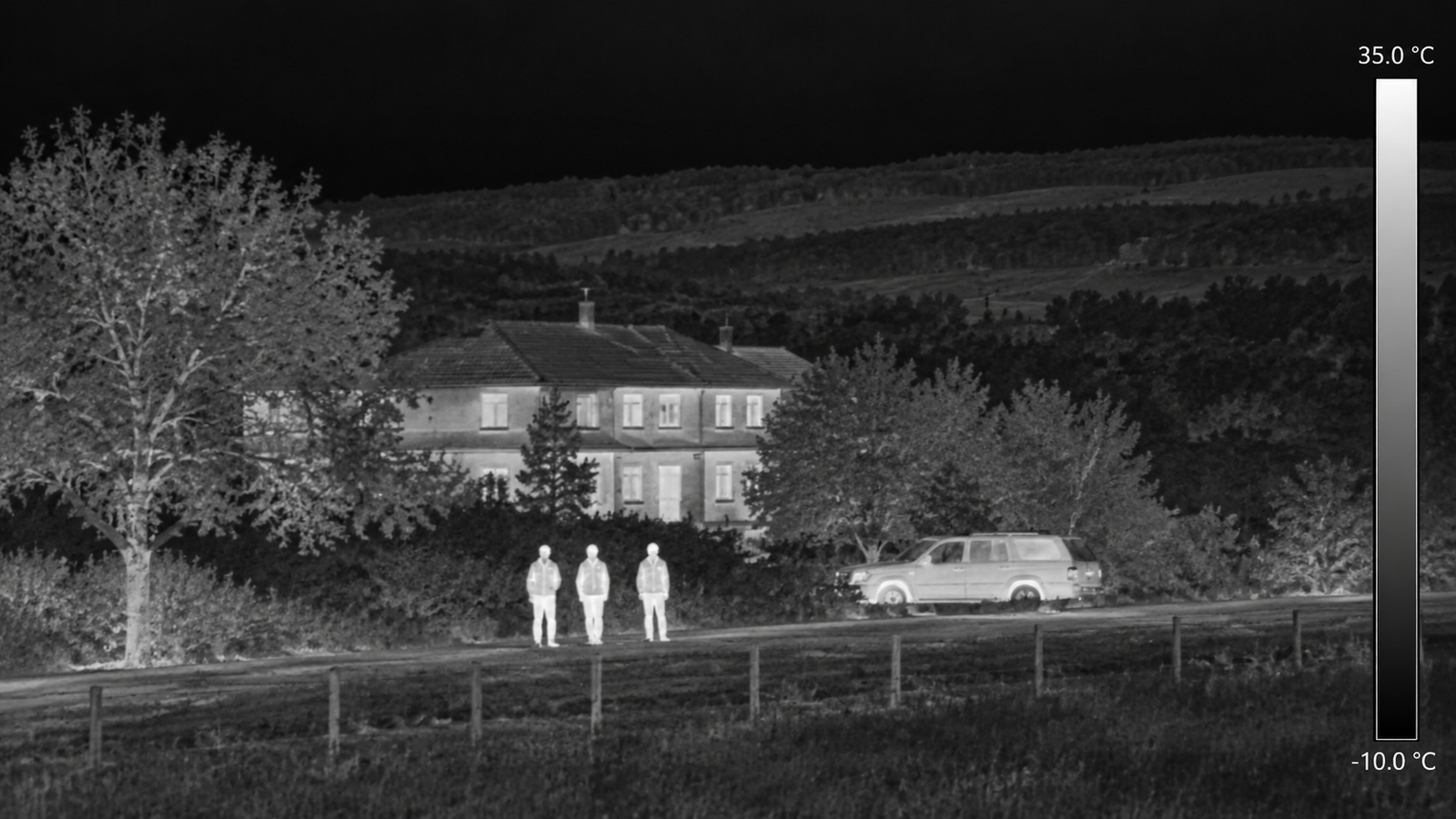
01 / PROJECT CONTEXT
Project overview
This project presents the development of an original 8× continuous Long-Wave Infrared (LWIR) zoom lens, covering a focal length range of 25–200 mm at F/1.4. The optical system was developed entirely from scratch, without using any existing or patented optical design as the starting point.
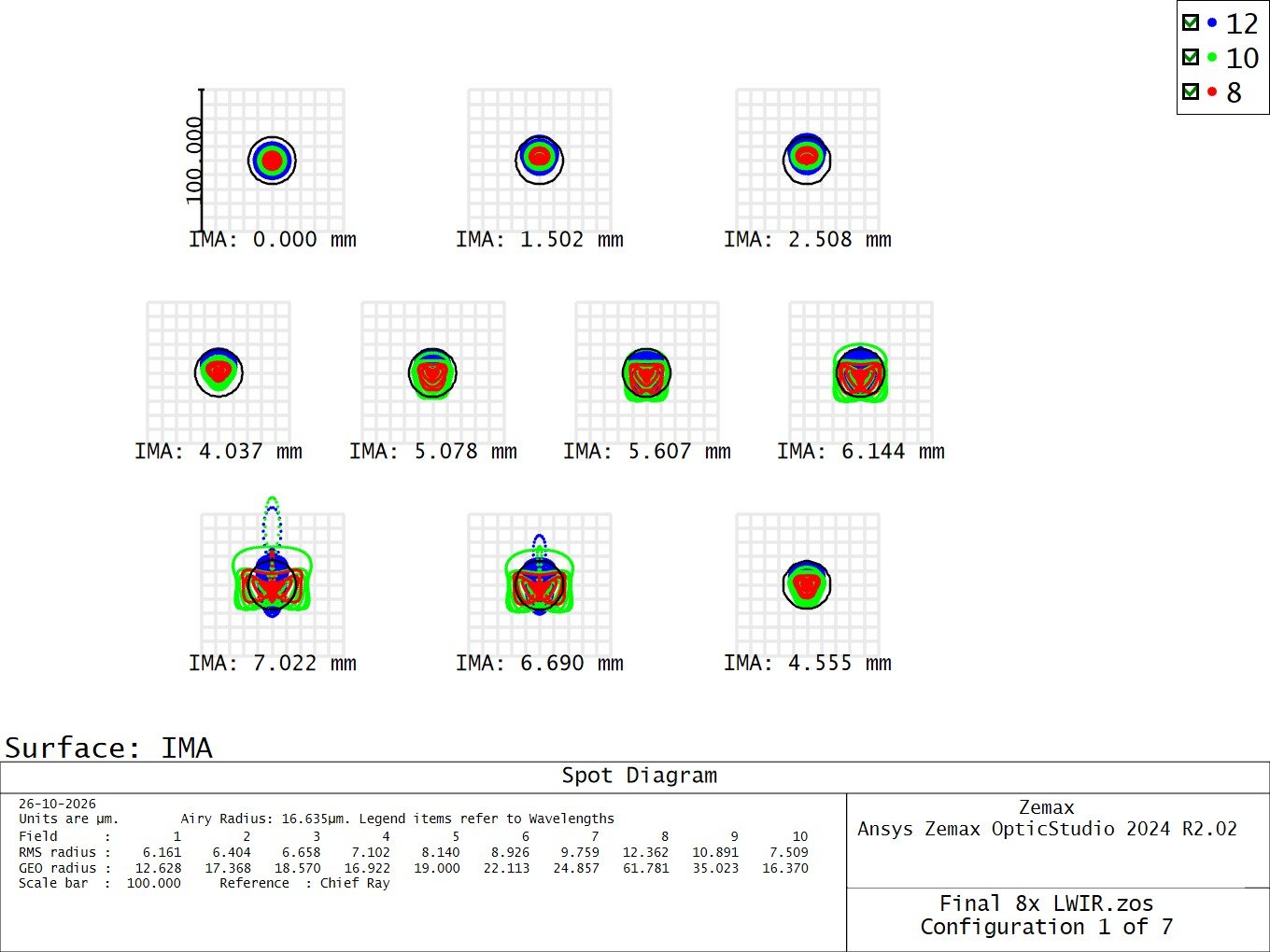
The design is tailored to a 640 × 512 infrared detector with a 17 µm pixel pitch, providing an active detector area of 10.88 × 8.704 mm. The optical system was optimized to deliver high imaging performance across the full zoom range, with particular emphasis on maintaining consistent image quality at wide, intermediate, and telephoto focal lengths.
The system employs a three-moving-group architecture for continuous zoom operation. Athermalization was incorporated to mitigate temperature-induced focus shifts and preserve imaging performance over the intended operating temperature range. The principal performance targets include high-resolution imaging, consistent optical performance throughout the zoom range, and stable operation under varying thermal conditions.
This project demonstrates an integrated approach to high-performance LWIR zoom lens development, combining original optical architecture, full-range optimization, detector matching, and thermal compensation.
02 / OPTICAL PARAMETERS
Key Specifications
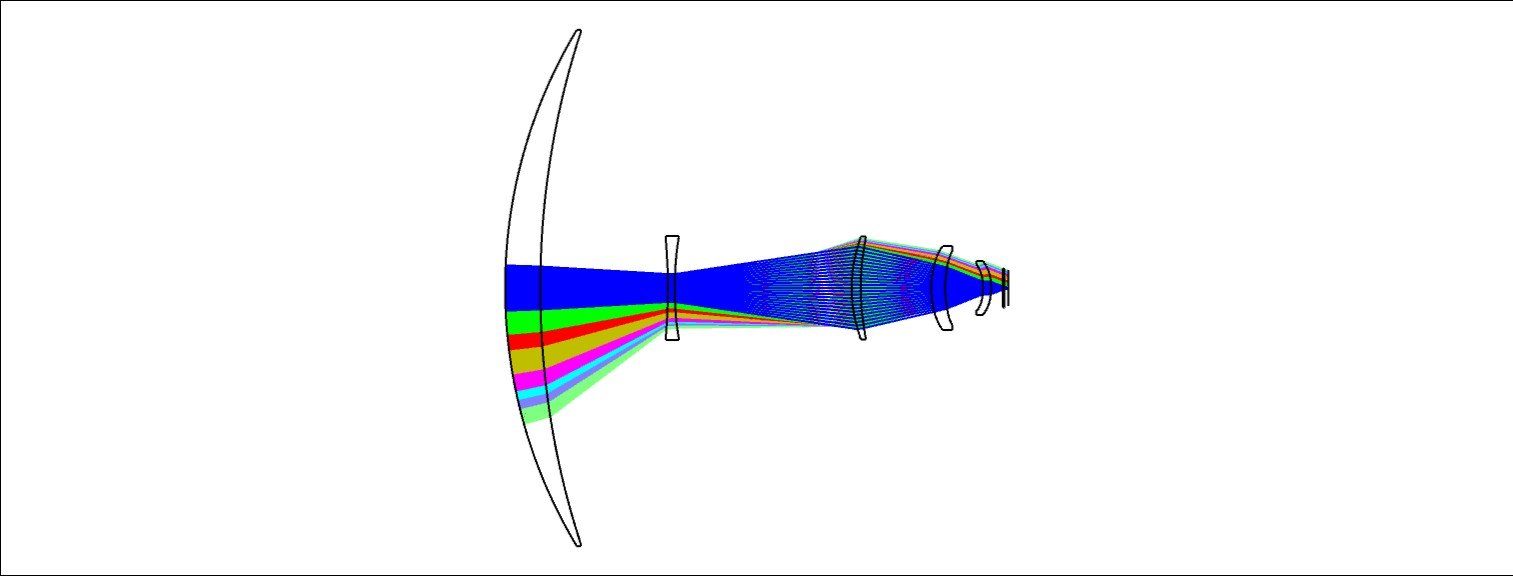
Optical layout — Wide Field of View (WFOV)
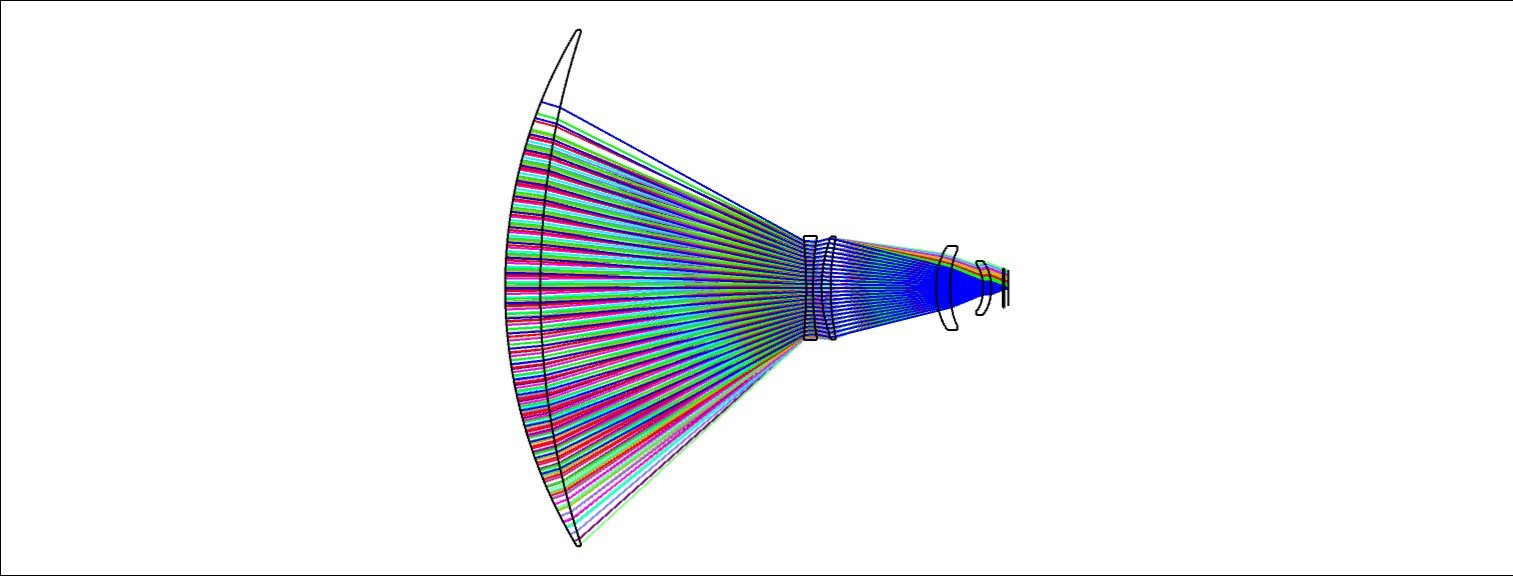
Optical layout — Narrow Field of View (NFOV)
Spot diagrams — Wide Field of View (WFOV)
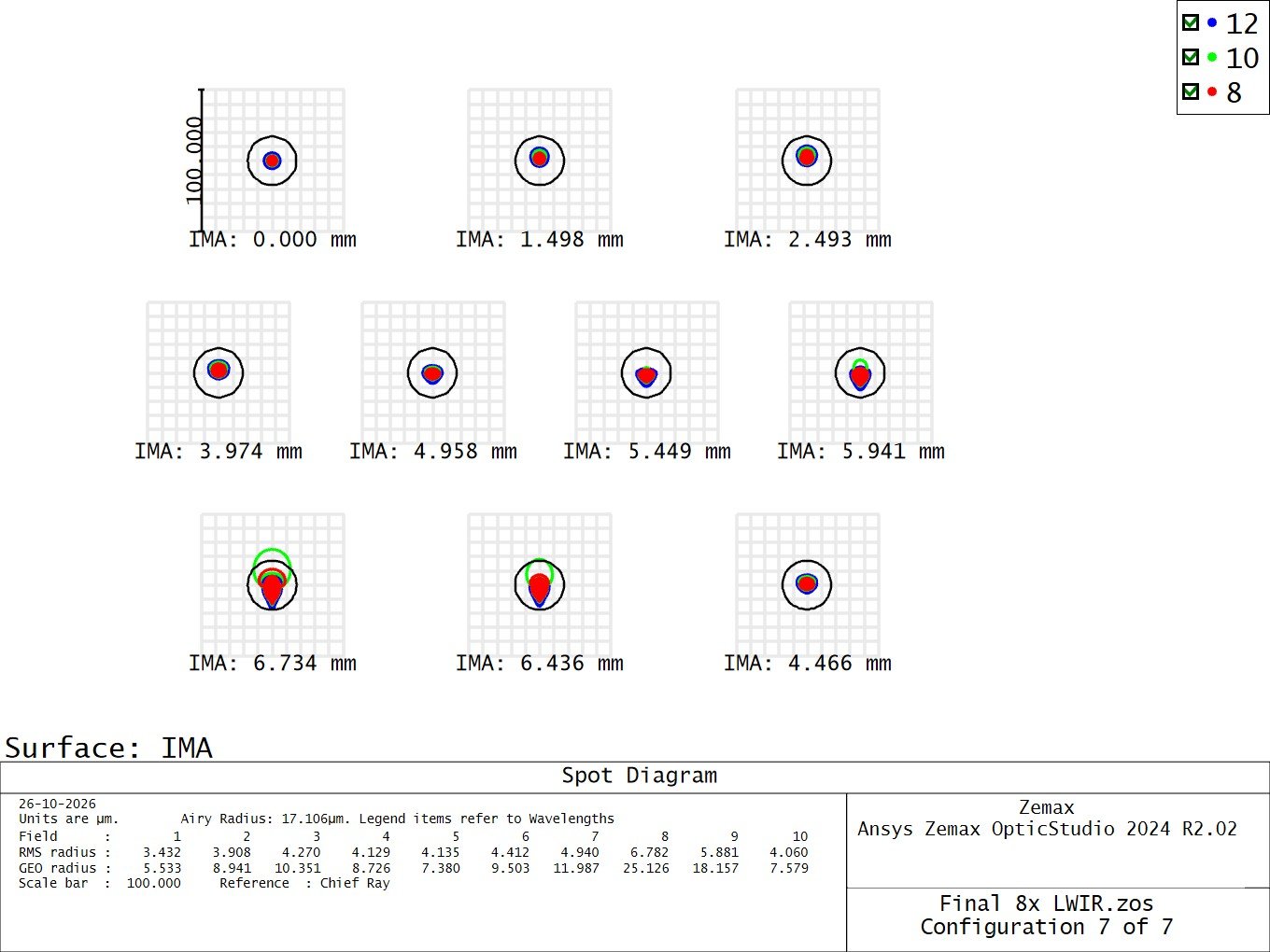
Spot diagrams — Narrow Field of View (NFOV)
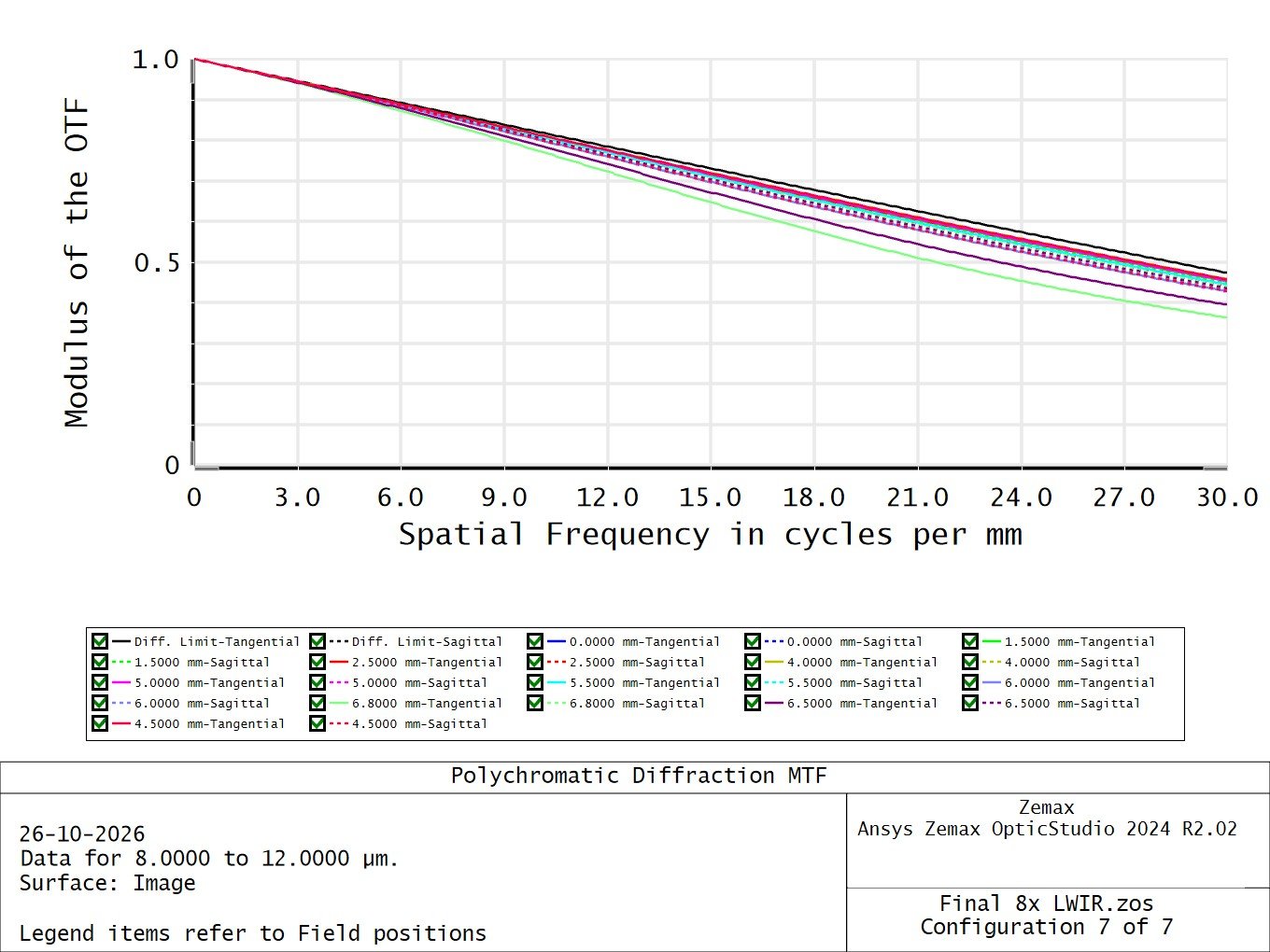
MTF performance — Wide Field of View (WFOV)
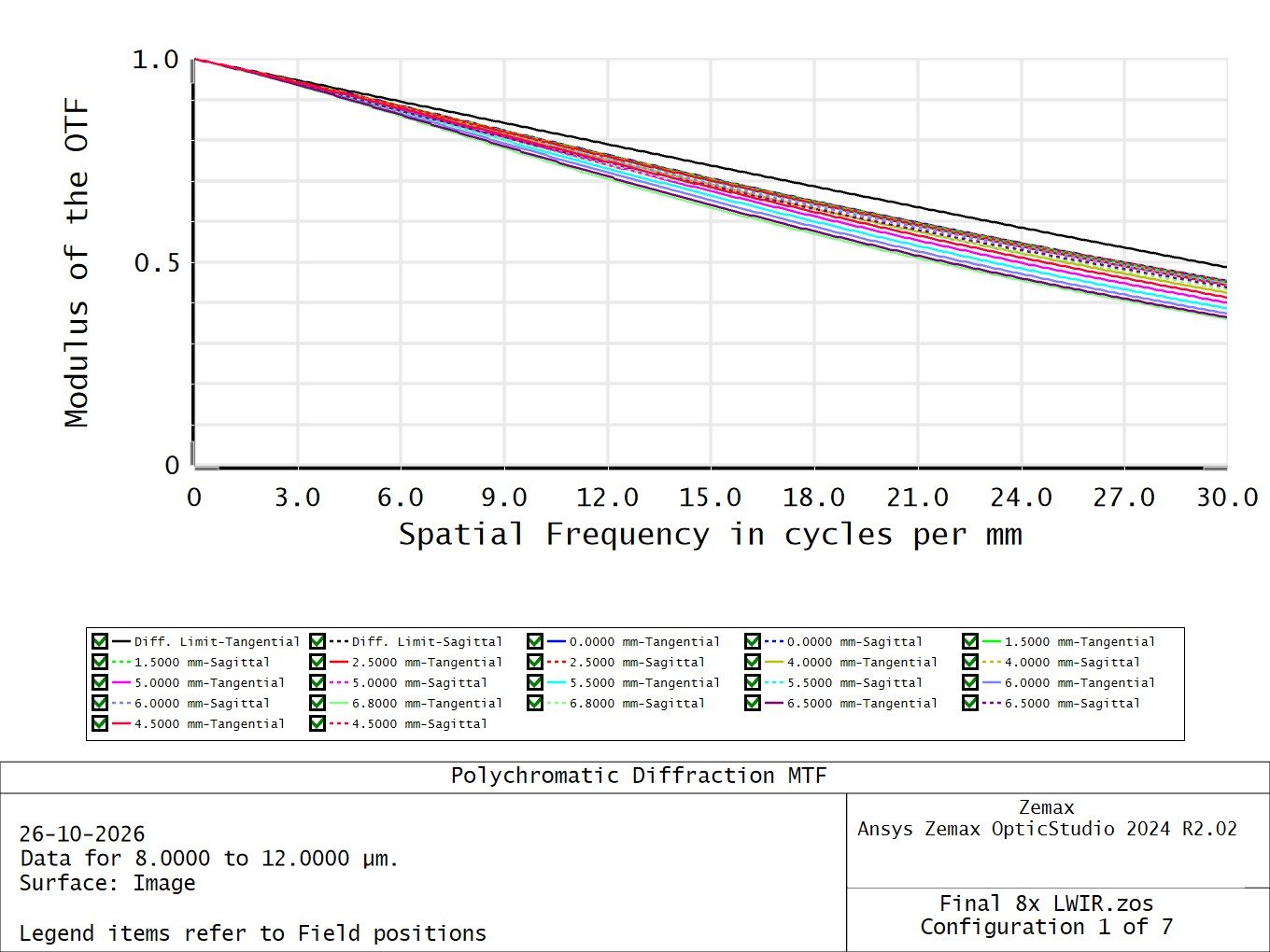
MTF performance — Narrow Field of View (NFOV)
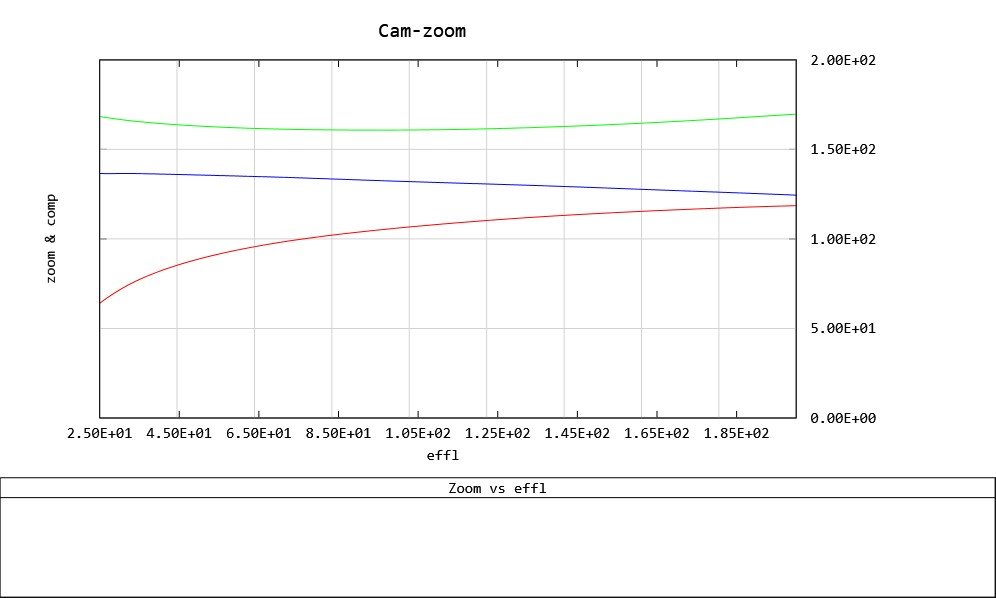
Zoom curves
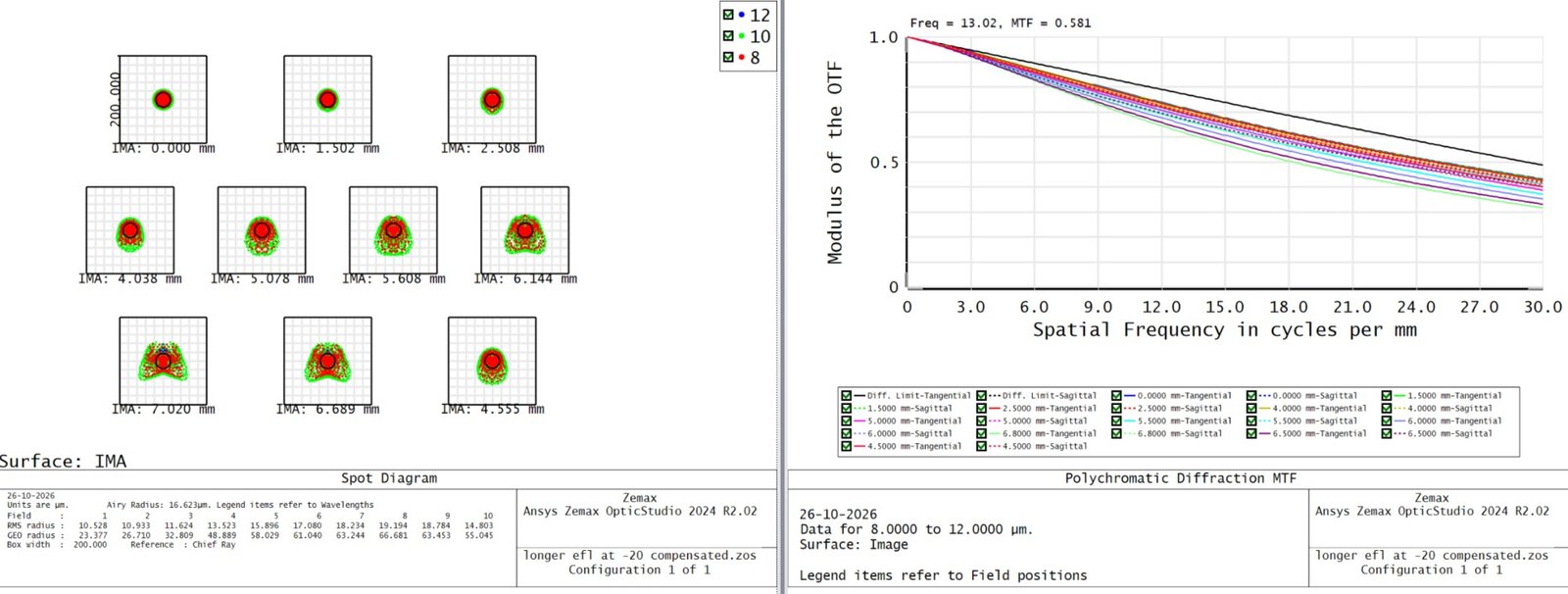
Athermalized performance — -20°C
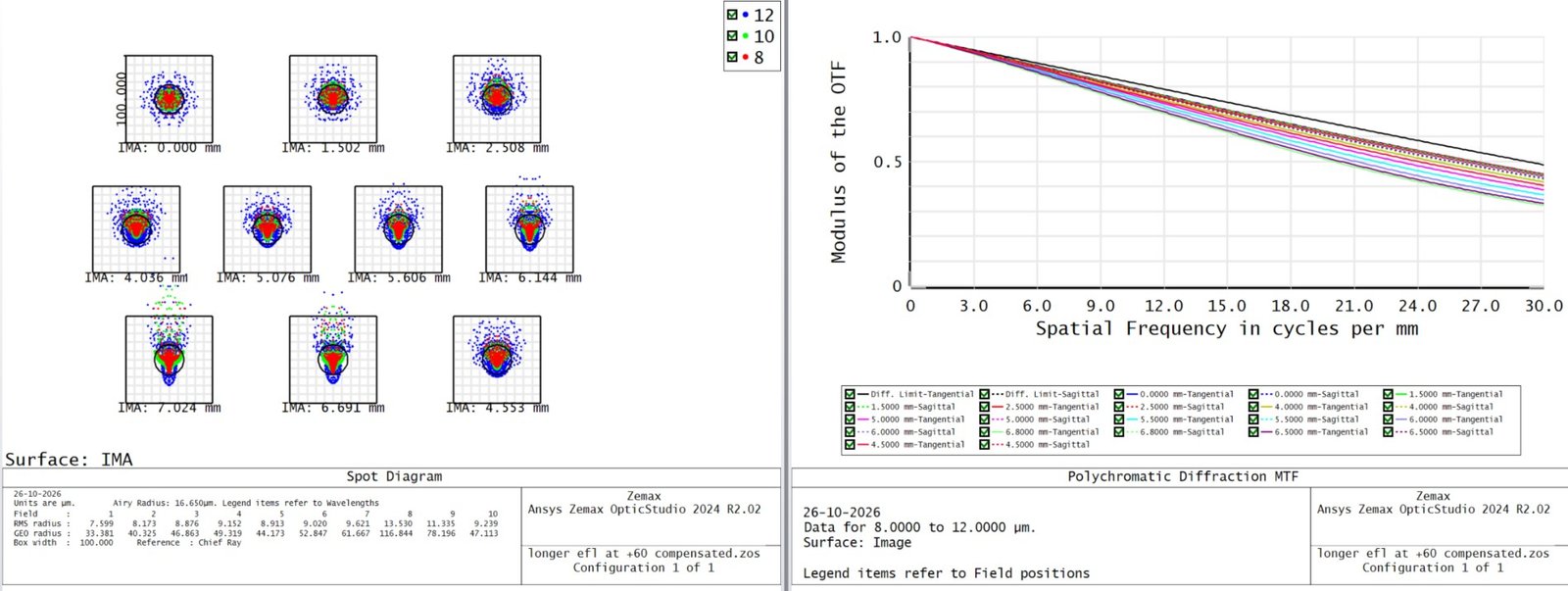
Athermalized performance — +60°C
THE ENGINEERING PERSPECTIVE
Design discussion
This project presents an original optical design of a continuous Long-Wave Infrared (LWIR) zoom lens covering a focal length range of 25–200 mm at a fast F-number of 1.4. The system was developed entirely from scratch, without using an existing or patented optical design as the starting point.
The design was optimized to achieve high imaging performance across the full zoom range, with particular attention to maintaining consistent optical performance from wide-angle to telephoto configurations. The system is designed for a 640 × 512 infrared detector with a 17 µm pixel pitch and a 13.9 mm detector diagonal.
A three-moving-group architecture was adopted to achieve continuous zoom functionality. The zoom trajectories were analyzed to ensure consistent group movement and coordinated focal length variation throughout the operating range.
Athermalization was incorporated into the design process to control temperature-induced focus shifts and maintain optical performance across the intended operating temperature range. The overall design reflects an optimization approach that considers image quality, thermal stability, and zoom mechanism behavior together.
COMMUNITY FEEDBACK
Comments
LET’S START A CONVERSATION
Discuss a similar
optical challenge.
Share your optical requirements or mentorship goals. We’ll explore how Devion Optics can help.
No comments yet. Be the first to share your thoughts!