
MWIR systems
MWIR zoom system.
01 / PROJECT CONTEXT
Project overview
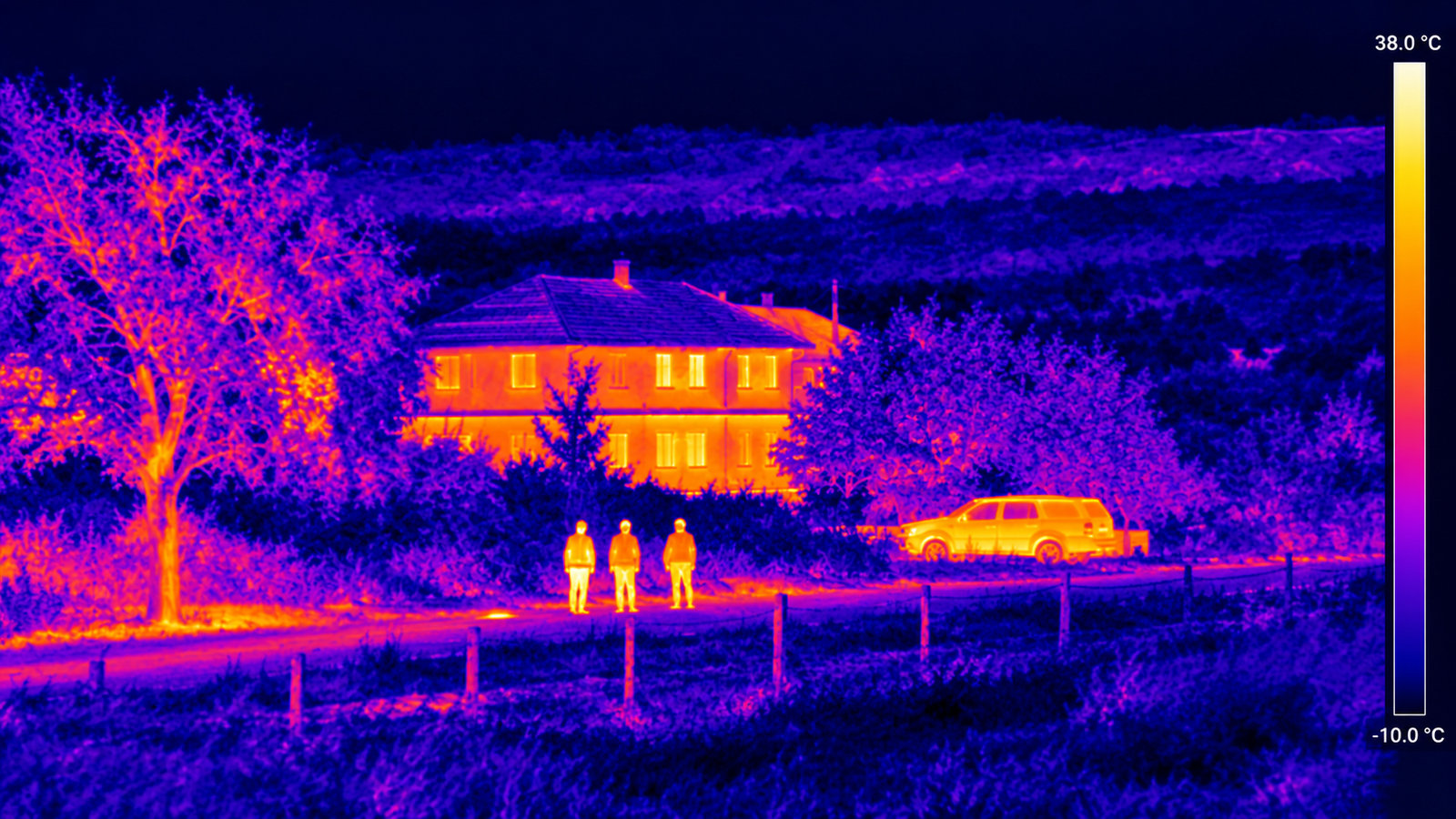
This project presents an original optical design of a 20× continuous zoom lens operating in the Mid-Wave Infrared (MWIR) region, covering a focal length range of 15 mm to 300 mm at a constant F-number of 3.6.
The optical system was developed entirely from scratch, without using any existing or patented optical design as its starting point. The design was optimized to maintain consistent imaging performance throughout the entire zoom range, rather than focusing only on selected focal length configurations.
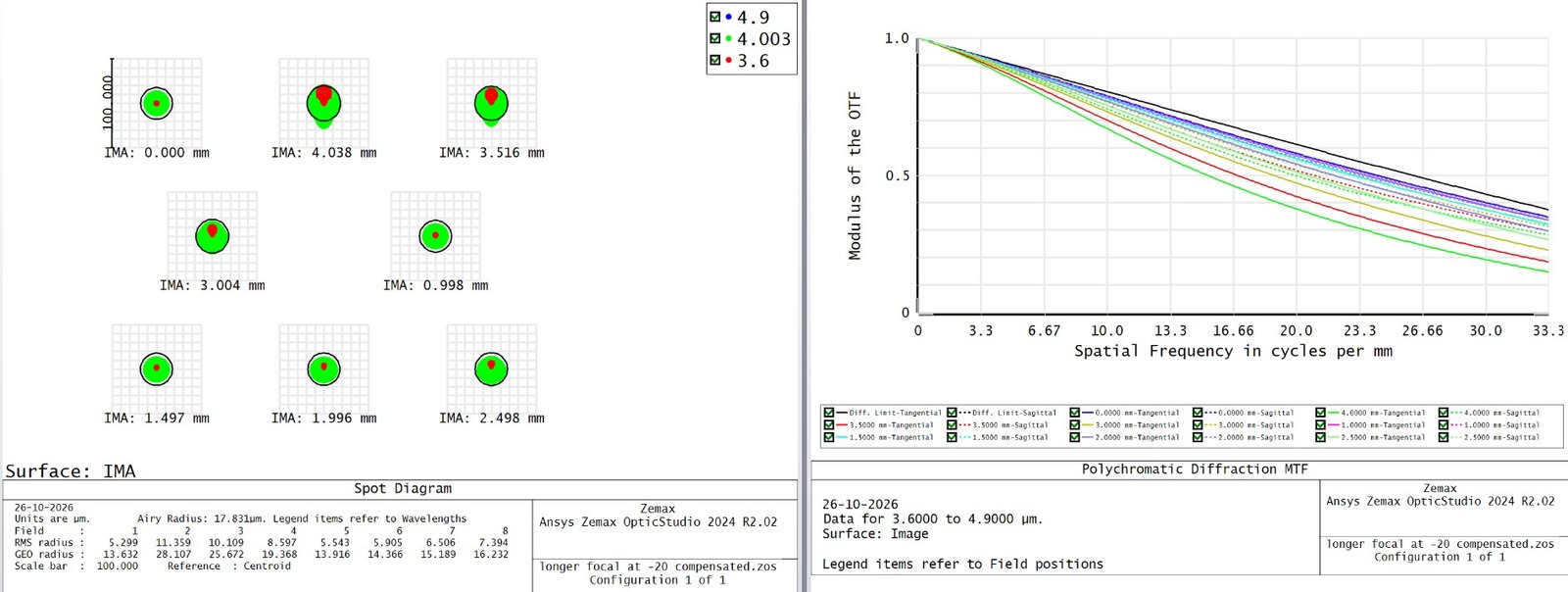
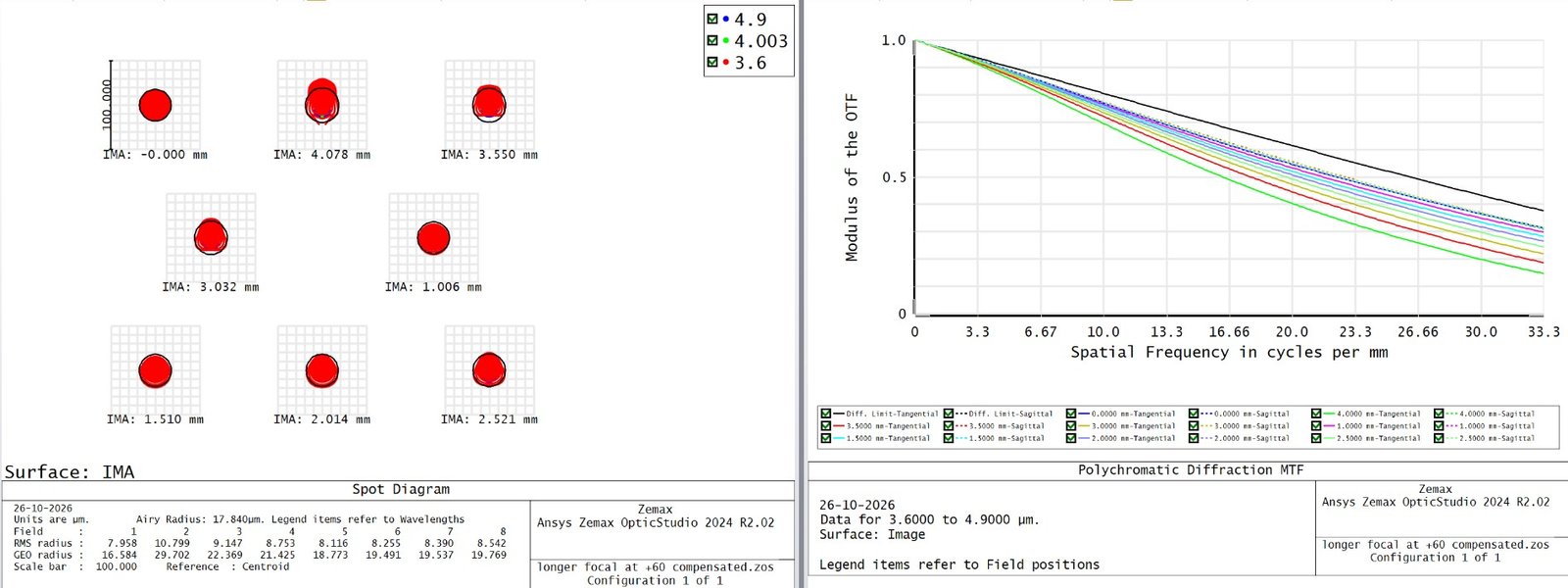
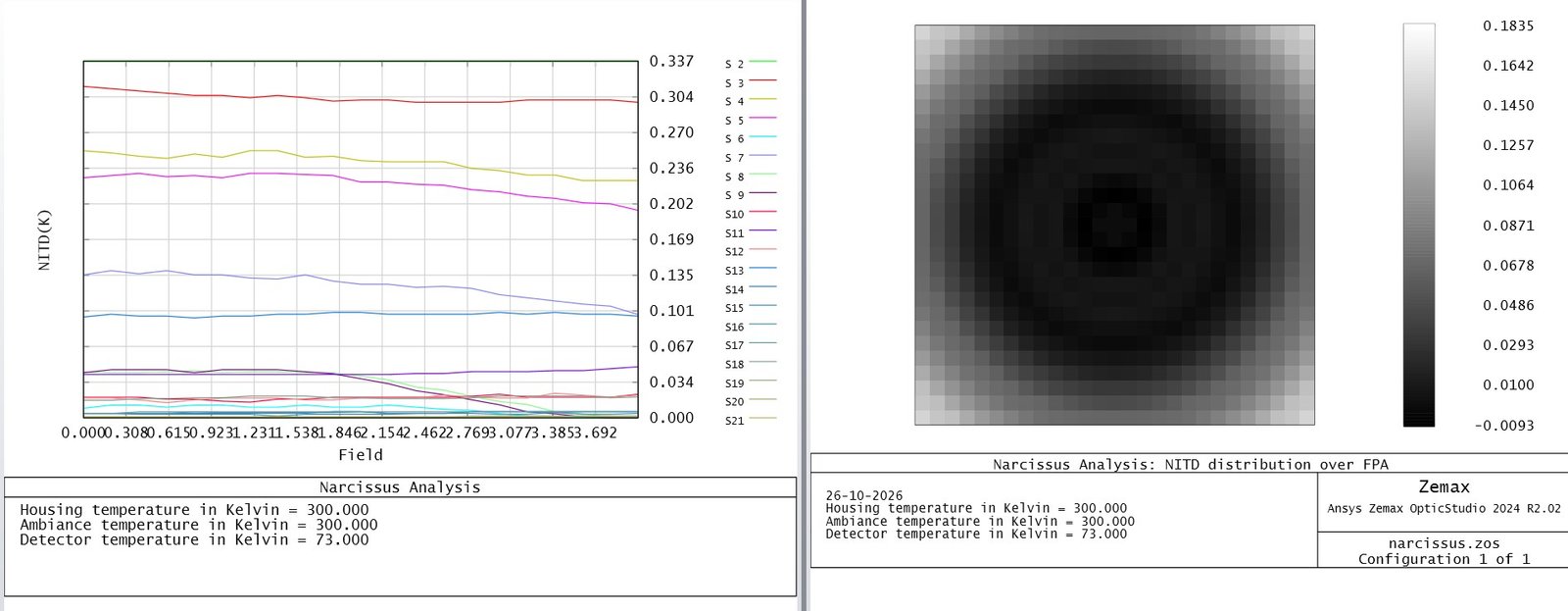
Particular attention was given to athermalization, narcissus suppression, and zoom compensation, ensuring consistent optical behavior as the system transitions from wide-angle to narrow-angle operation.
02 / OPTICAL PARAMETERS
Key Specifications
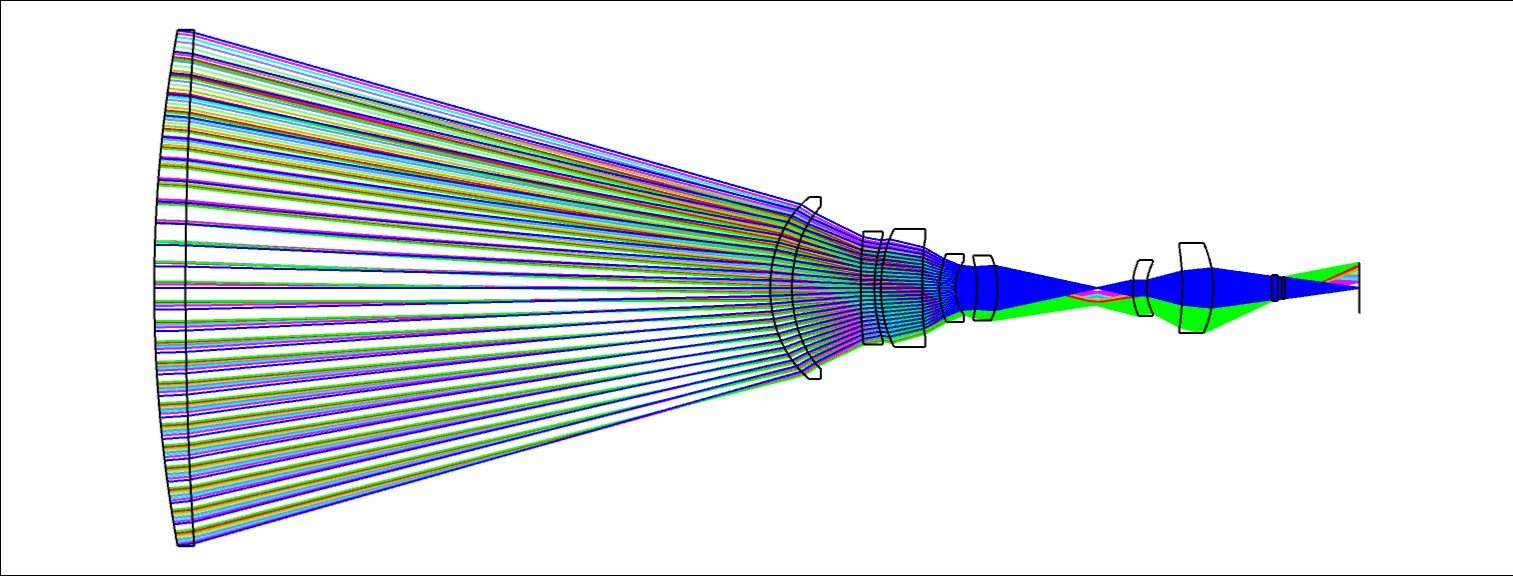
Optical layout — Wide Field of View (WFOV)
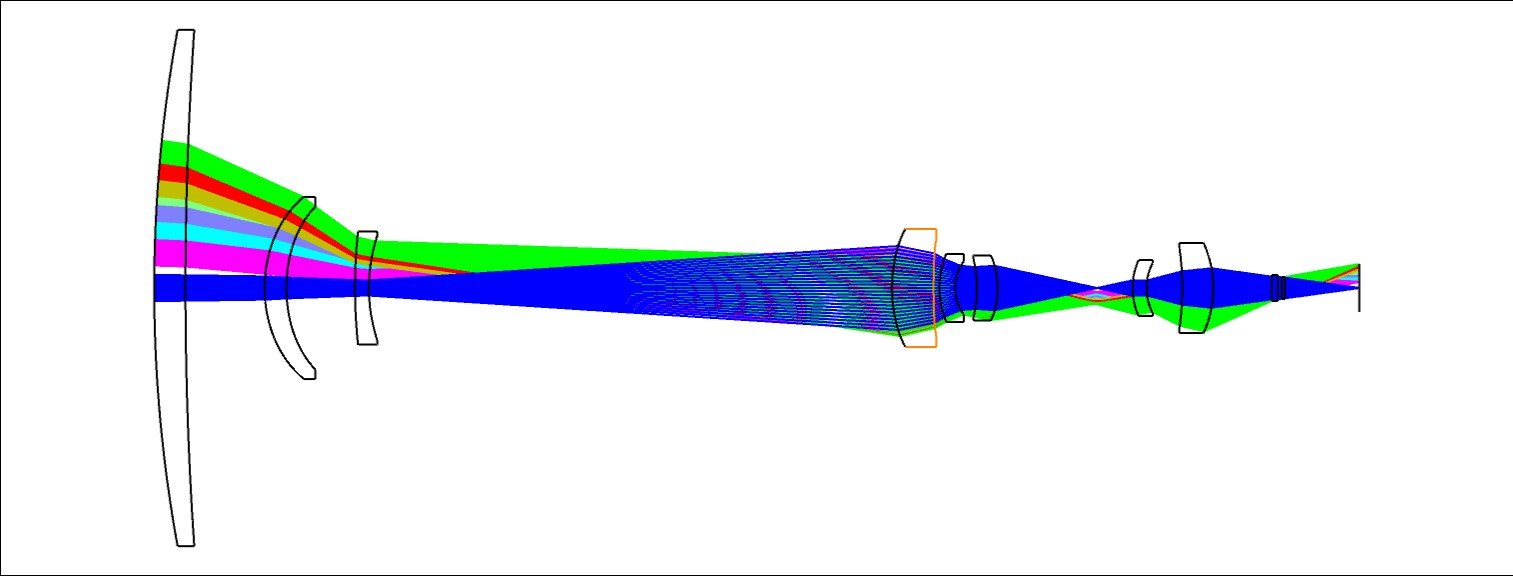
Optical layout — Narrow Field of View (NFOV)
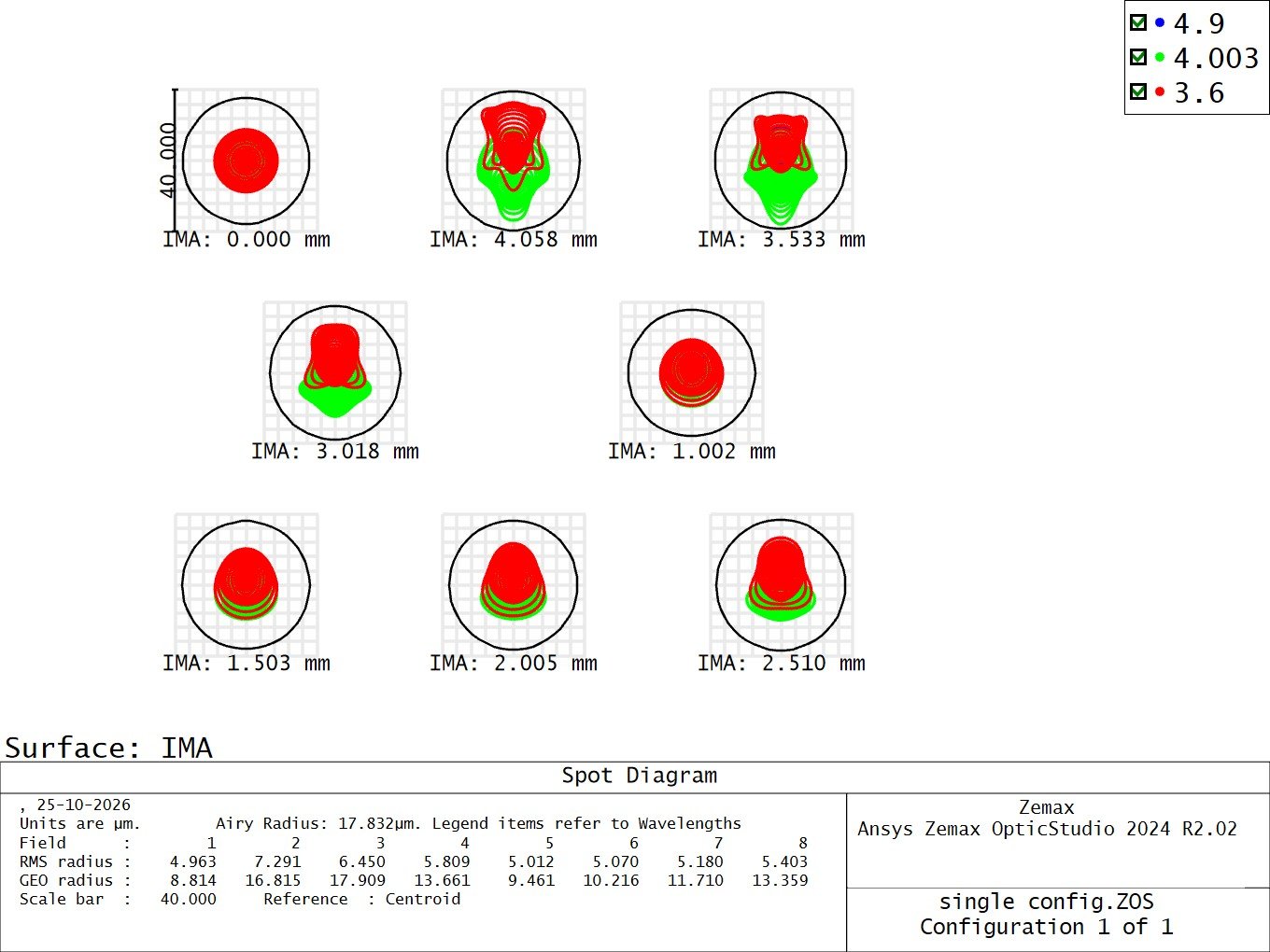
Spot diagrams — Wide Field of View (WFOV)
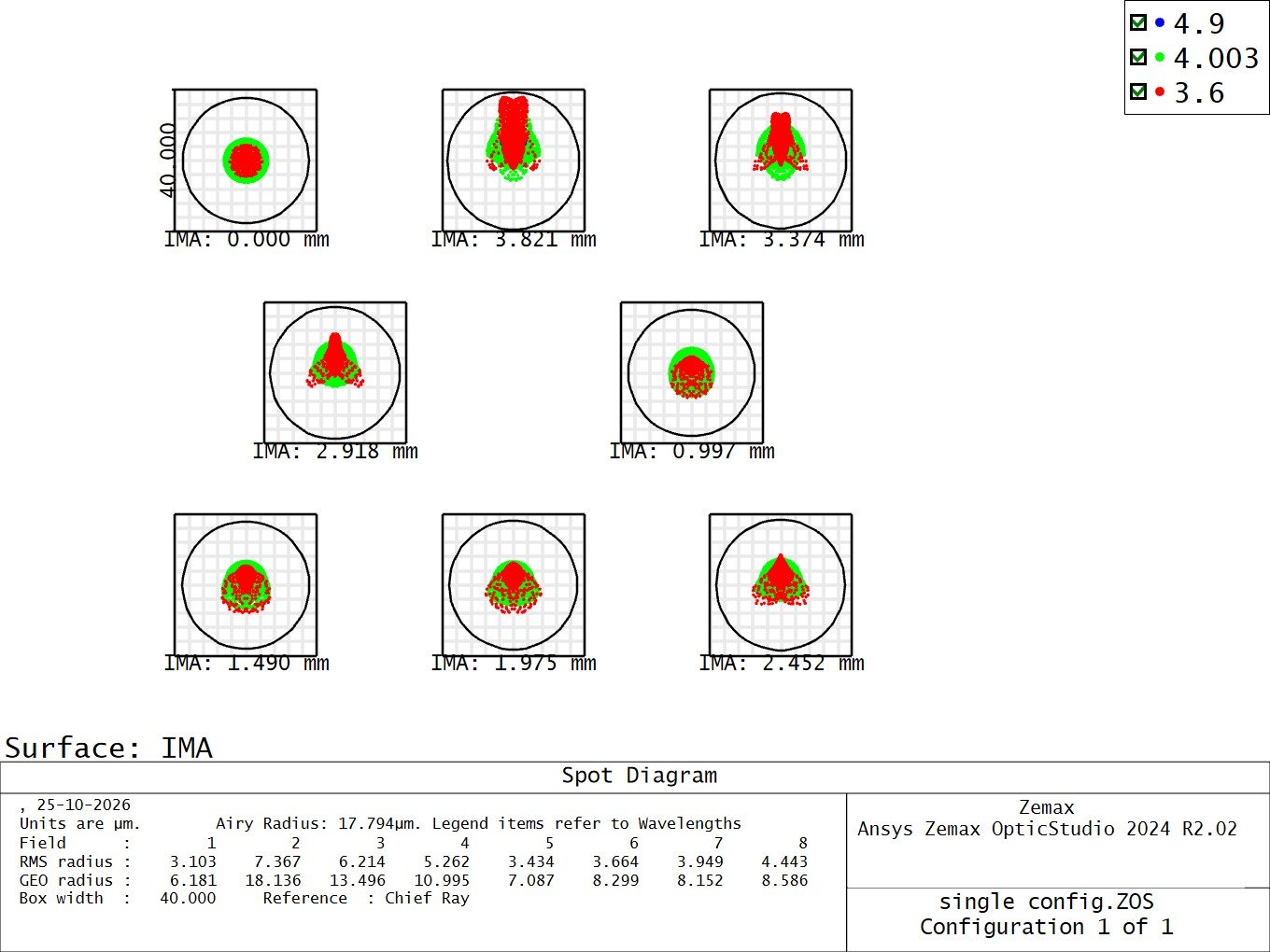
Spot diagrams — Narrow Field of View (NFOV)
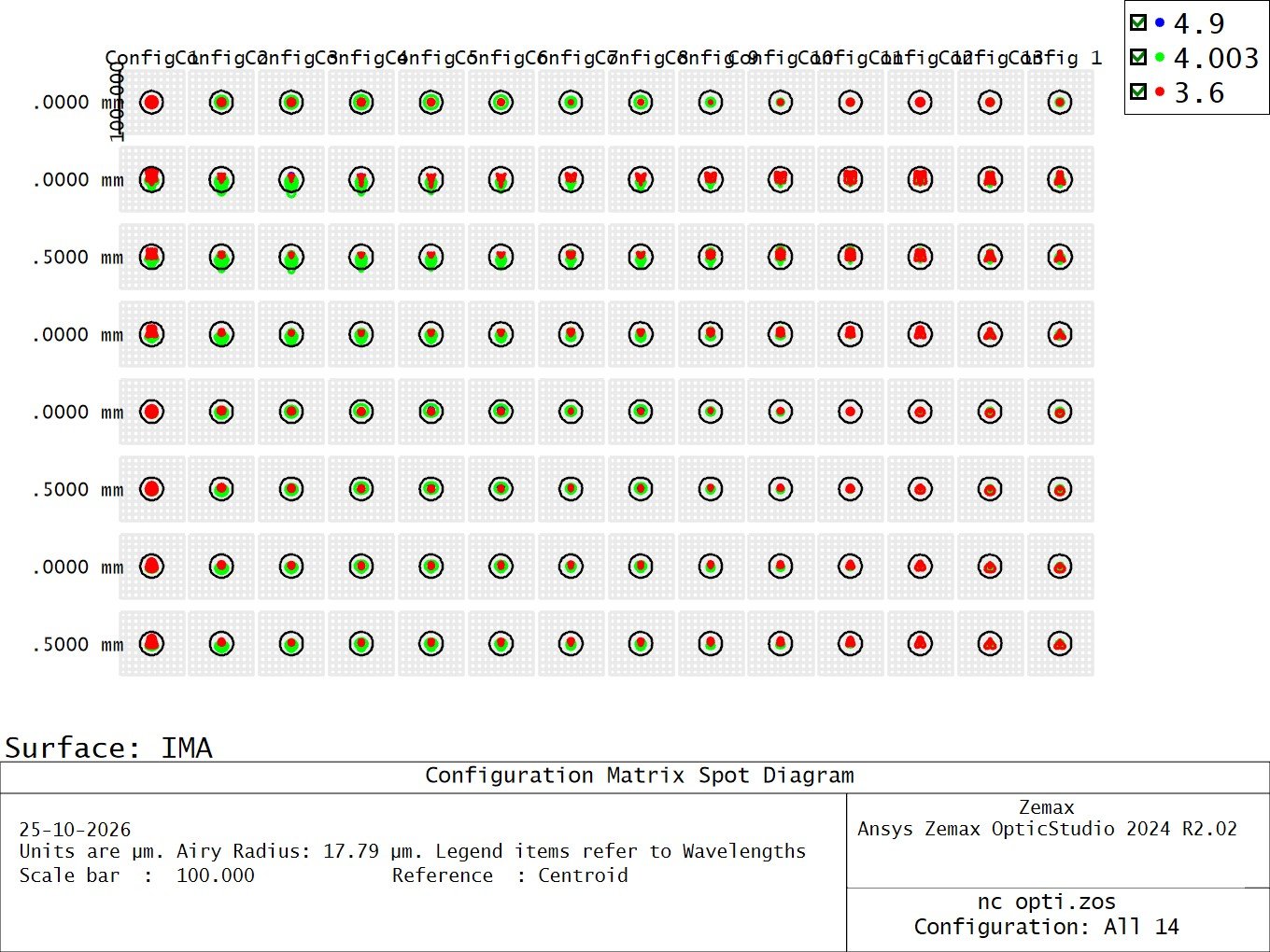
Matrix spot diagram
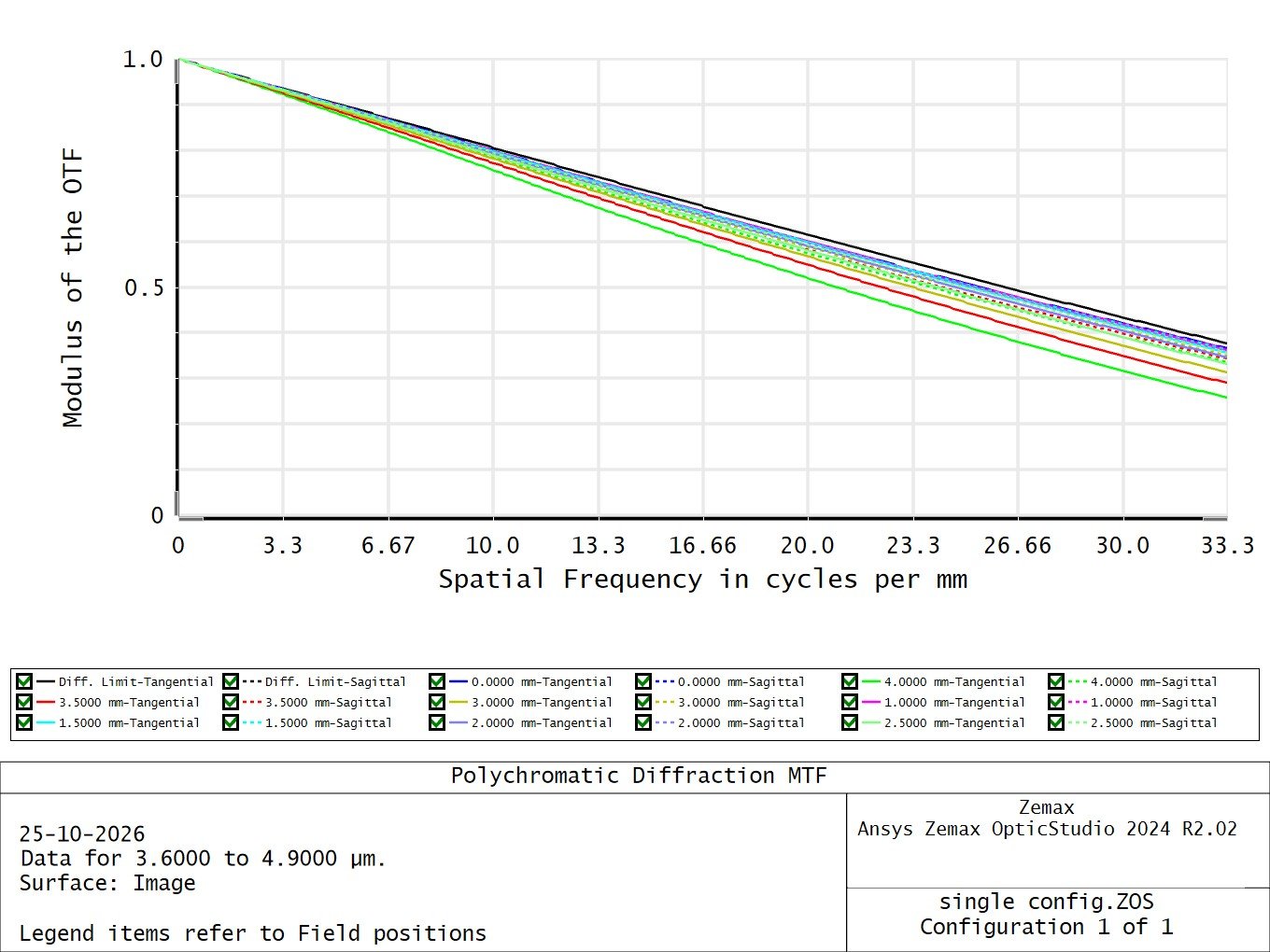
MTF performance — Wide Field of View (WFOV)
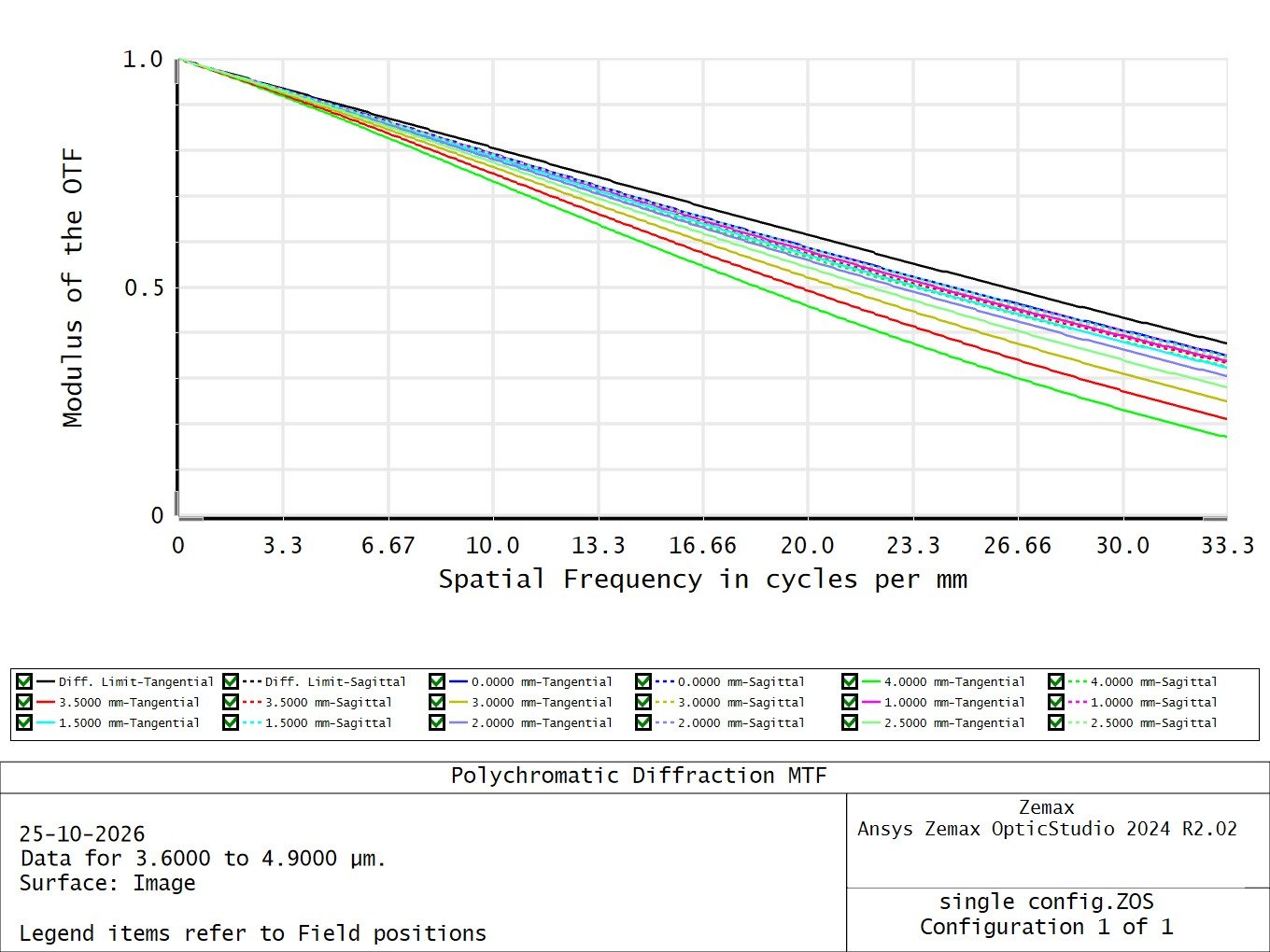
MTF performance — Narrow Field of View (NFOV)
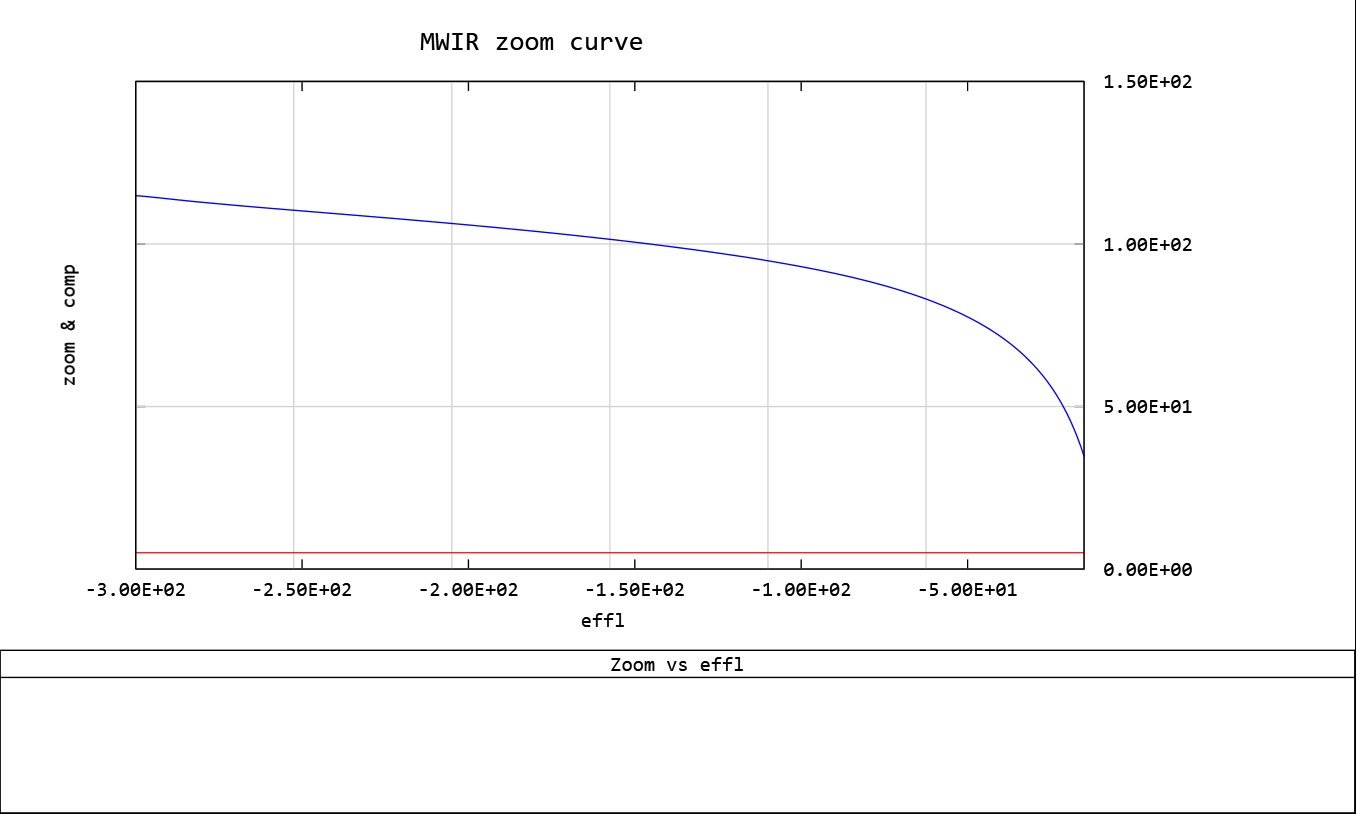
Zoom curves
Athermalized performance — -20°C
Athermalized performance — +60°C
Narcissus analysis
THE ENGINEERING PERSPECTIVE
Design discussion
The 15–300 mm F/3.6 MWIR zoom lens was developed entirely from scratch, without using an existing or patented optical design as the starting point. The system was optimized to achieve the best possible imaging performance across the full 20× continuous zoom range.
The zoom mechanism consists of two moving groups: a two-element variator and a single-element compensator. Particular attention was given to maintaining consistent zoom trajectories and achieving stable optical performance throughout the focal length range.
During the initial optimization, the system achieved its best imaging performance, but narcissus performance remained unsatisfactory. The design was subsequently re-optimized to reduce narcissus effects, accepting a small degradation in conventional imaging performance to achieve a more balanced overall system design.
Athermalization was also incorporated to control temperature-induced focus shifts and maintain performance over the intended operating temperature range. The final design reflects a balanced optimization approach that considers image quality, narcissus, thermal stability, and zoom mechanism behavior together.
COMMUNITY FEEDBACK
Comments
LET’S START A CONVERSATION
Discuss a similar
optical challenge.
Share your optical requirements or mentorship goals. We’ll explore how Devion Optics can help.
No comments yet. Be the first to share your thoughts!